Choosing an ultrasonic homogenizer looks simple until you open a supplier catalog and find handheld units, benchtop systems, and 30-liter reactors all described with the same three words. Pick the wrong one and the cost is real: proteins degrade because the sample overheats, nanoparticle dispersions come out uneven from batch to batch, or a high-power industrial unit sits half-idle on a bench that only ever processes 20 ml. The good news is that selection comes down to a small set of variables you can actually reason about — frequency, power, probe diameter, temperature control, and whether you run in batch or continuous flow. This guide walks through each one in plain engineering terms, then maps them onto the two situations most buyers are in: a lab that needs reliable, repeatable sample preparation, and a production team scaling a process past the five-liter mark. Whether your job is cell disruption, emulsification, nanoparticle dispersion, or botanical extraction, by the end you will know which specifications matter for your application — and which are just marketing.
What an Ultrasonic Homogenizer Actually Does
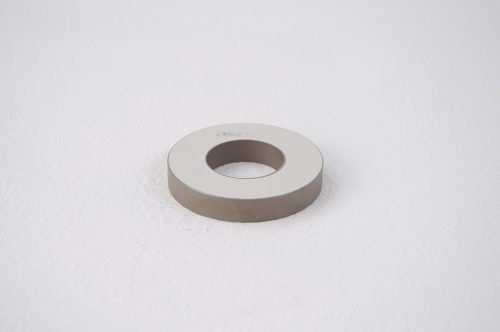
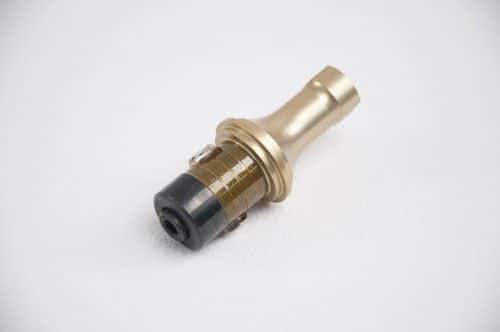
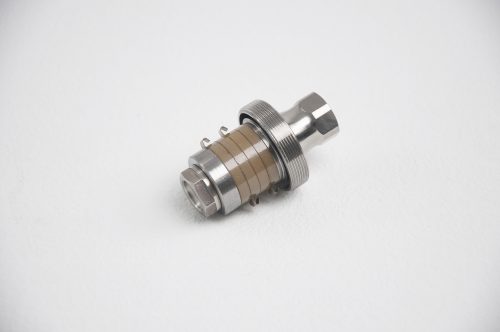
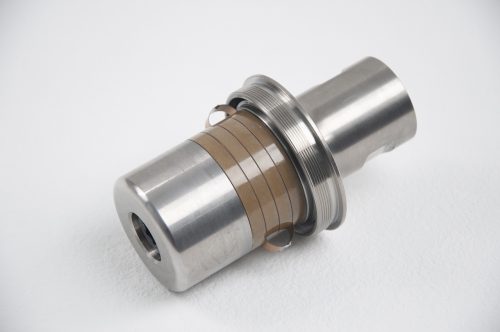
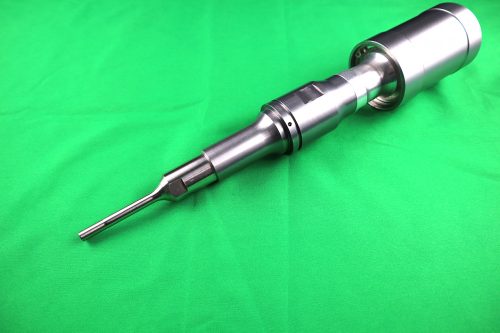
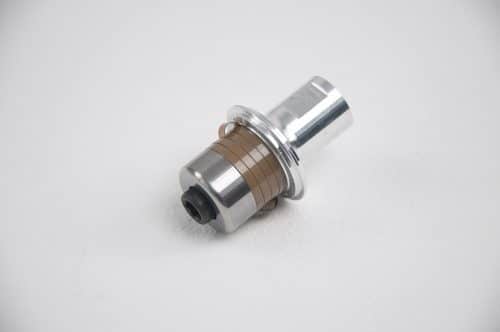
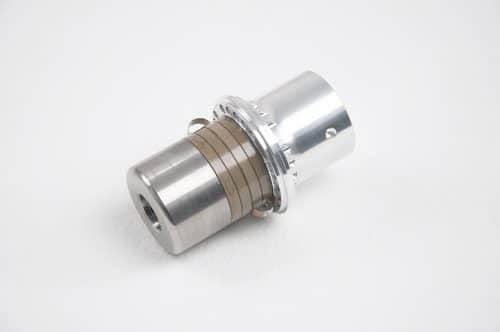
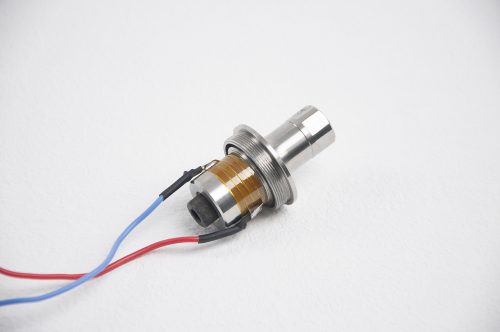
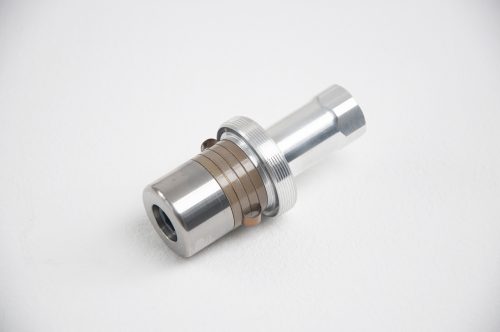
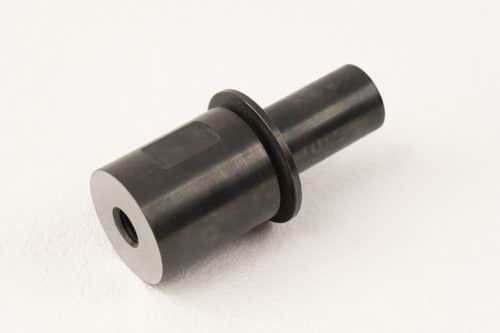
An ultrasonic homogenizer — also called a sonicator, probe sonicator, or ultrasonic processor; they are the same class of instrument — converts mains electricity into high-frequency mechanical vibration. A generator drives a piezoelectric transducer, the transducer vibrates a titanium probe (horn), and the probe tip expands and contracts thousands of times per second. In liquid, that rapid motion creates cavitation: microscopic bubbles form and violently collapse, releasing intense localized energy. Anything inside that cavitation field gets processed — cells rupture, agglomerates break apart, and immiscible phases emulsify.
That single mechanism covers three broad jobs. Disruption breaks open cells, bacteria, and tissue for DNA, protein, or metabolite extraction. Dispersion and emulsification deagglomerate nanoparticles and blend liquid-liquid or liquid-solid systems into stable suspensions. Extraction opens plant and biological matrices so solvent can reach the target compounds faster and at lower temperature. Every selection rule below follows from what is happening at that probe tip.
The Five Selection Variables That Actually Matter
1. Frequency — Why Probe Homogenizers Run Near 20 kHz
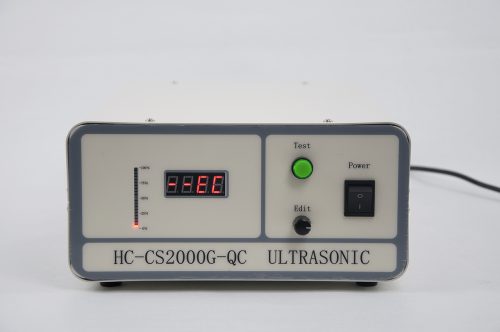
Cavitation is most energetic at low ultrasonic frequencies. That is why probe-type ultrasonic homogenizers operate in the ~20 kHz band rather than the 40 kHz and higher frequencies you find in ultrasonic cleaning baths. Lower frequency means larger cavitation bubbles collapsing with more force — exactly what disruption, dispersion, and larger-volume processing need. SONOBIO probe systems run with automatic frequency tracking (a 19–26 kHz scanning window, typically 24–25 kHz on the benchtop unit and 20 kHz on the industrial reactor), which keeps the probe locked at resonance even as the sample heats and the horn slowly wears. Practically, this means you do not pick “20 vs 40 kHz” the way bath users do — for probe homogenization, the low-kHz band is the working range, and auto-tracking removes the manual tuning headache.
2. Power — Match Watts to Volume
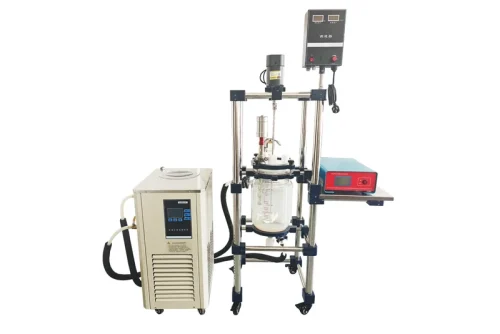
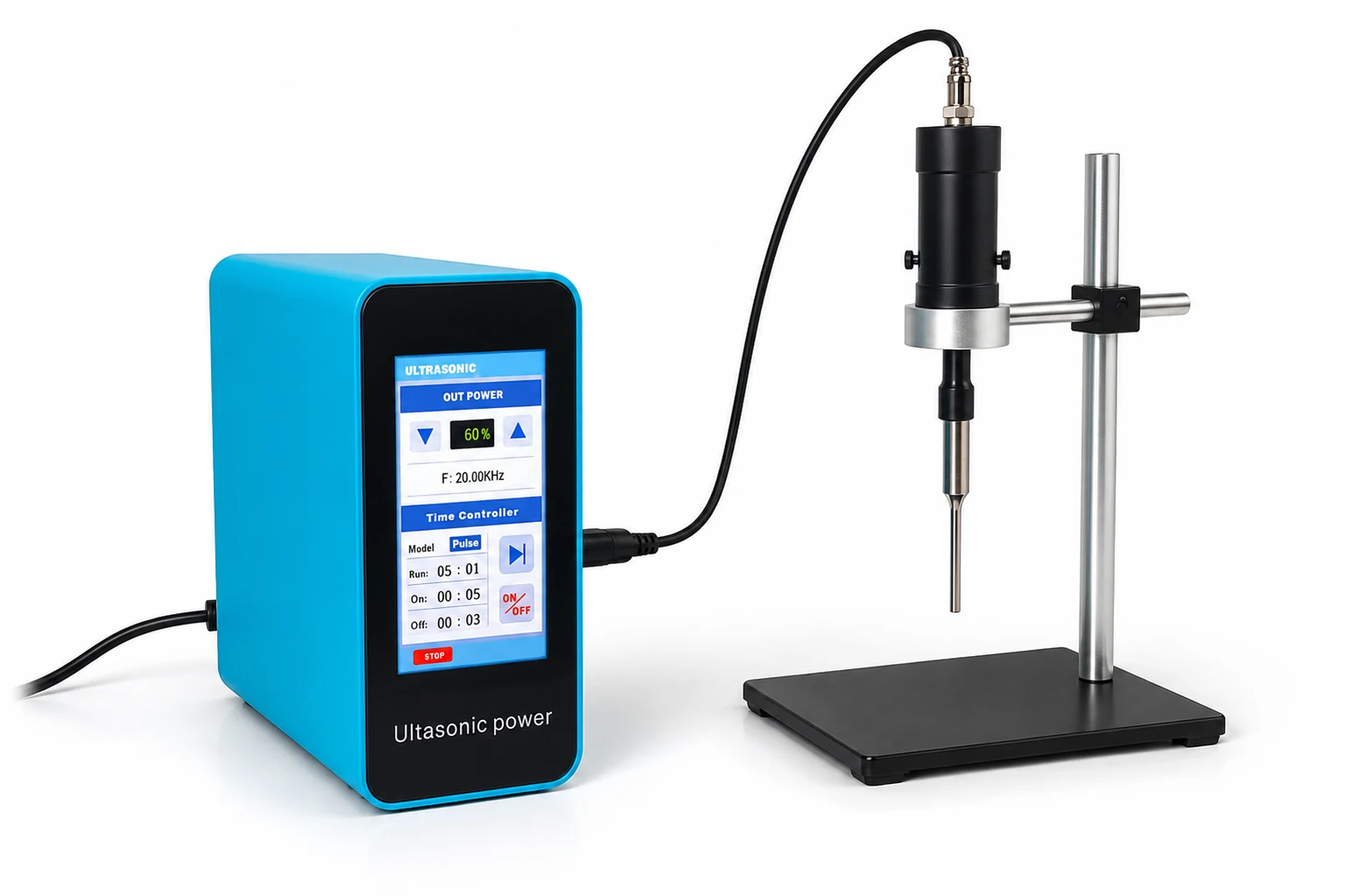
Power output determines how much sample you can process effectively and how fast. Too little power stretches processing time and lets heat build up; too much over-processes small volumes and causes foaming or excessive probe erosion. As a reference, a benchtop platform such as the SONOBIO 800 W Integrated Ultrasonic Homogenizer delivers 0–100% stepless control and handles 0.5 ml up to roughly a 5-liter vessel, while industrial work moves to dedicated systems — the SONOBIO ultrasonic glass reactor pairs a 20 kHz / 2000 W probe with mechanical stirring for 10–150 L batches. The rule of thumb: size the wattage to your largest routine batch, then run smaller samples at a lower amplitude setting.
3. Probe (Horn) Diameter — Sized to Your Vessel
The probe tip diameter dictates how much sample can be processed. Smaller tips deliver high-intensity sonication focused in a small area; larger tips spread energy across bigger volumes at lower intensity. SONOBIO titanium-alloy probes follow a clear volume map:
| Probe diameter | Recommended sample volume | Typical use |
|---|---|---|
| Ø3 mm | 0.3 – 100 ml | Microtubes, precious samples |
| Ø6 mm | 0.3 – 200 ml | Small-batch cell lysis |
| Ø10 mm | 10 – 500 ml | Routine lab dispersion |
| Ø13 mm | 10 ml – 1 L | Larger lab batches |
| Ø20 mm | 50 ml – 2 L | Scale-up / pilot |
Match the probe to your most common volume, keep the tip submerged about 15–25 mm and away from the vessel wall, and order at least one spare horn — probes are consumables. The full homogenizer and sonicator range lists the available tip sizes from Ø1.5 mm up to Ø30 mm.
4. Temperature Control — The Silent Failure Mode
Cavitation generates heat, and heat is the most common reason a sonication protocol fails. Proteins denature, enzymes lose activity, and heat-sensitive actives degrade — often without any obvious sign until the assay comes back wrong. Three controls solve it: run in pulse mode (for example 5 seconds on, 5 seconds off) instead of continuous, keep the sample in an ice bath, and use a system with a real temperature sensor and auto-shutoff. SONOBIO benchtop units integrate a temperature probe with overheat protection so processing stops at a set limit rather than cooking the sample.
5. Batch vs Continuous Flow
Most lab work is intermittent batch processing. Once volumes climb into the tens of liters or you need consistent residence time across a production run, a jacketed reactor or flow cell becomes the right architecture — combining ultrasonic energy with stirring and external heating or cooling. This is the line between a lab homogenizer and an industrial system, covered next.
Lab vs Industrial: Picking the Right Platform
SONOBIO splits cleanly into four tiers, and most buyers self-select quickly:
- Handheld & portable — for fieldwork, demos, and small or precious samples where a benchtop is impractical. See the SONOBIO handheld homogenizer.
- Benchtop integrated (800 W) — the lab workhorse for 0.5 ml to ~5 L, with a soundproof enclosure, touch screen, and programmable modes. This is the right default for most research labs.
- Non-contact sonicators — for sterile or sealed-vial processing where the probe must never touch the sample, avoiding cross-contamination.
- Industrial glass reactors (10–150 L) — ultrasonic dispersion plus mechanical stirring in a jacketed vessel for pilot and production, with a –80 °C to +250 °C temperature range.
Because the benchtop and reactor share the same generator architecture and auto-frequency tracking, a process developed on the bench transfers to pilot scale without re-validating the fundamentals.
Picking by Your Application
Cell disruption and lysis: low frequency, pulse mode, ice bath, and a probe sized to your tube — the most common lab use, and the one most sensitive to heat. Nanoparticle dispersion and emulsification: dispersion quality scales with energy density (amplitude × time), so a unit with precise power control and the correct probe gives repeatable results for carbon nanotubes, graphene, metal oxides, and coatings. Botanical and plant-compound extraction: cavitation ruptures cell walls so solvent reaches polyphenols and other actives in minutes instead of hours, at lower temperature than thermal methods. The same platform handles all three — you change the probe and the parameters, not the instrument.
Ultrasonic vs High-Pressure Homogenizer — Which One?
High-pressure homogenizers force fluid through a narrow gap at extreme pressure. They excel at very high continuous throughput of a single fixed product, but the hardware is expensive, maintenance is non-trivial, and changing formulation or volume is slow. Ultrasonic homogenizers deliver shear through cavitation at the probe face, so you can move from 5 ml to 2 L by changing the probe and power level and iterate formulations the same afternoon. For R&D, method development, and lab-to-pilot scale-up, that flexibility usually outweighs raw throughput. If you are locked into one product at very high volume, high-pressure wins; if you are still developing the process or running varied samples, ultrasonic is the lower-friction path.
Buyer’s Checklist Before You Order
- Largest routine batch volume — and your smallest sample
- Power rating matched to that largest batch
- Probe diameter(s) for your vessels, plus a spare horn
- Real temperature sensor with auto-shutoff and pulse mode
- Generator with automatic frequency tracking
- Batch vs continuous-flow / reactor architecture
- Probe material (titanium alloy) and warranty terms
- Application support — can the supplier recommend a probe and parameters for your sample?
FAQ
Is a sonicator the same as an ultrasonic homogenizer?
Yes. “Sonicator,” “probe sonicator,” “ultrasonic processor,” and “ultrasonic homogenizer” all describe the same probe-based instrument.
What probe do I need for 100 ml?
A Ø10 mm probe (rated 10–500 ml) is the usual choice; a Ø6 mm works for more intense processing of smaller portions.
Can one homogenizer handle both 5 ml and 2 L?
Yes, within its power range — an 800 W benchtop unit covers roughly 0.5 ml to 5 L by swapping probes and adjusting amplitude.
Why does my sample heat up so much?
Continuous-mode operation. Switch to pulse mode, add an ice bath, and keep the probe off the vessel wall.
Need Help Choosing?
The fastest way to avoid an expensive mismatch is to size the system to your sample before you buy. Tell us your application, volume range, and temperature constraints and our engineers will recommend a specific probe and power level. Browse the full ultrasonic homogenizer range or contact us for a specification consult and quote. Our homogenizer platforms have been cited in 13+ peer-reviewed publications across drug delivery, nanomaterials, and water treatment — a good sign your method will stand up to scrutiny.
Related posts


Popular products
-
 Anillo piezocerámico Φ69~Φ70mm
$20.00
Anillo piezocerámico Φ69~Φ70mm
$20.00
-
28kHz 600Watt F25-SA-1
Original price was: $220.00.$184.00Current price is: $184.00.
-
 SONOBIO 30L Ultrasonic Homogenizer Double-Layer Glass Reactor
Original price was: $10,000.00.$7,000.00Current price is: $7,000.00.
SONOBIO 30L Ultrasonic Homogenizer Double-Layer Glass Reactor
Original price was: $10,000.00.$7,000.00Current price is: $7,000.00.
-
15kHz 2600Watt Generador ultrasónico
Original price was: $960.00.$800.00Current price is: $800.00.
-
40kHz 800Watt F25ST1
Original price was: $250.00.$220.00Current price is: $220.00.
-
Anillo piezocerámico Φ55mm
Original price was: $14.00.$11.50Current price is: $11.50.
-
Anillo piezocerámico Φ38mm
Original price was: $6.00.$5.00Current price is: $5.00.
-
TelSonic Replacement 20kHz 3200Watt
Original price was: $390.00.$350.00Current price is: $350.00.
-
 20kHz 2000Watt Spot Welding Set
Original price was: $300.00.$260.00Current price is: $260.00.
20kHz 2000Watt Spot Welding Set
Original price was: $300.00.$260.00Current price is: $260.00.
-
35kHz 900Watt F30-SA-P
Original price was: $250.00.$207.00Current price is: $207.00.
-
TelSonic Replacement 20kHz 4500Watt
Original price was: $390.00.$350.00Current price is: $350.00.
-
Weber 35kHz 1200watt Replacement
Original price was: $280.00.$250.00Current price is: $250.00.
-
Anillo piezocerámico Φ45~Φ49mm
Price range: $5.00 through $9.50
-
28kHz 600Watt F30-SA-1
Original price was: $208.00.$184.00Current price is: $184.00.
-
20kHz Booster; Gain 1:3
Original price was: $180.00.$165.00Current price is: $165.00.