
Conventional high-speed mixers produce emulsions with droplet sizes above 1 µm. These macro-emulsions cream, sediment, or coalesce within hours to days. Nanoemulsions — with oil droplet diameters in the 20–500 nm range — behave fundamentally differently: they resist creaming and coalescence, penetrate biological membranes more readily, and enable encapsulation efficiencies that are simply not achievable at larger droplet scales. The same physical principle that makes them useful also makes them harder to produce: forcing a liquid into droplets below 200 nm requires far more energy input than a conventional rotor-stator can deliver.
Ultrasonic homogenization is the standard laboratory method for nanoemulsion and liposome preparation precisely because cavitation-driven energy delivery is intense, localized, and tunable at a scale that matches the droplet-size requirements of pharmaceutical, cosmetic, and nutraceutical formulations.
Key takeaways
- Cavitation at 20 kHz creates localized pressures of hundreds of bar and transient temperatures over 1000 C.
- O/W nanoemulsion baseline: oil 10-30%, surfactant 2-5% (Tween 80 or lecithin), water to 100%.
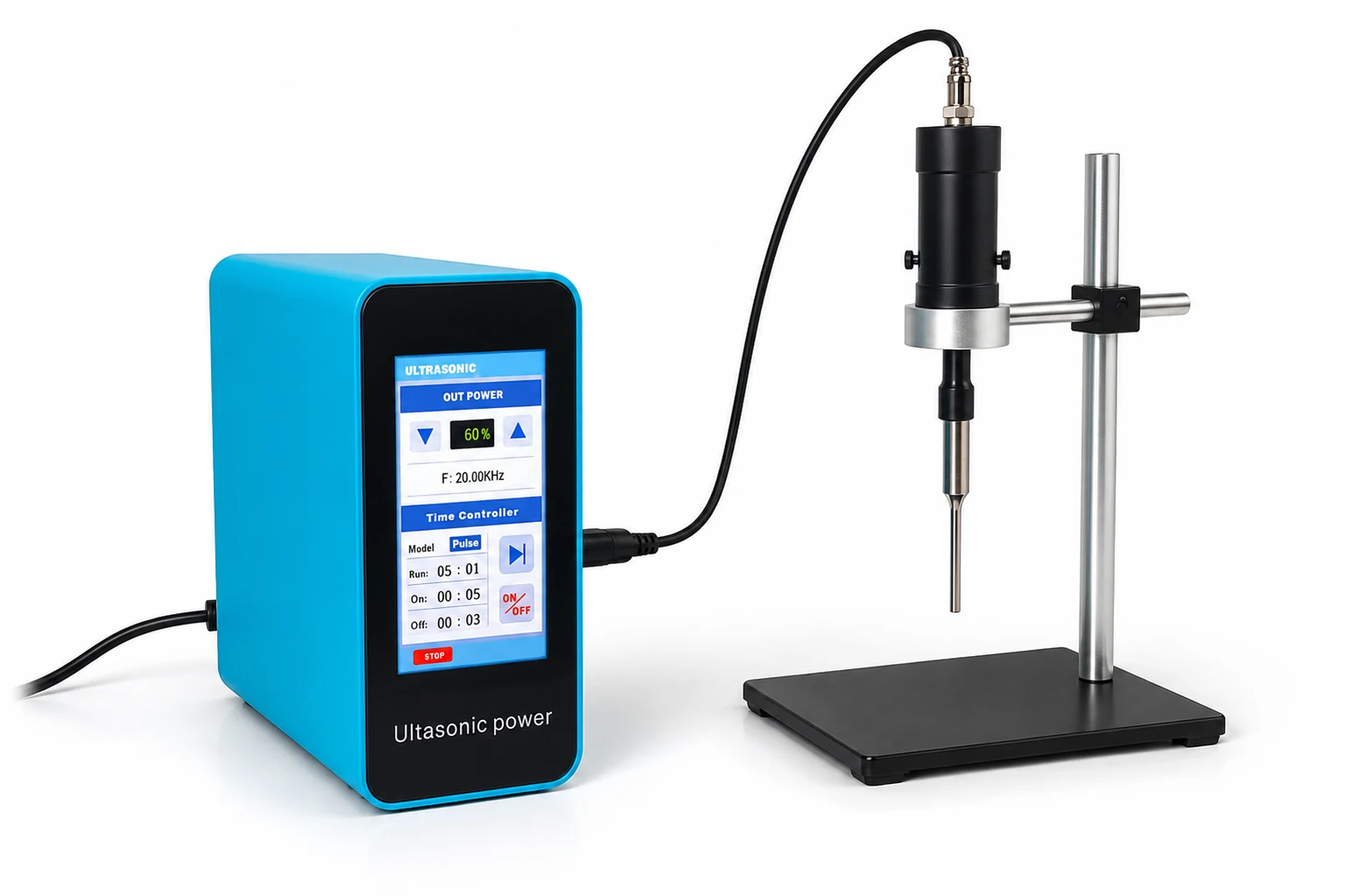
- Nanoemulsions: amplitude 40-60%, 5s on/5s off pulsing, 5-15 minutes for 10-100 mL batches.
- Liposome SUVs (50-200 nm, PDI < 0.2): amplitude 20-35%, 3s on/7s off, 10-20 minutes.
- Most formulations reach 100-300 nm; below 50 nm needs high-pressure homogenization or microfluidization.
The Physics: How Ultrasonic Cavitation Creates Nanodroplets
When the titanium probe of a SONOBIO sonicator operates at 20 kHz, it launches compression and rarefaction cycles into the liquid at 20,000 times per second. During rarefaction, vapor and dissolved gas nucleate into microbubbles. When those bubbles collapse, they release energy in an extremely small volume — pressures in the hundreds of bar and transient temperatures exceeding 1000 °C at the collapse point, lasting only nanoseconds. The surrounding bulk liquid does not heat to those temperatures, but the mechanical shear forces radiating from each collapse event are enough to shatter oil droplets and lipid vesicles down into the nanometer range.
Two mechanisms operate simultaneously:
- Mechanical shear: The liquid jet produced by asymmetric bubble collapse shears the oil-water interface, breaking large droplets into smaller ones.
- Turbulent micro-mixing: The cavitation field generates intense local turbulence that continuously brings fresh oil-water interface into the high-shear zone, ensuring that the entire emulsion volume is processed rather than just the region immediately around the probe tip.
The result is a narrow droplet size distribution achievable in minutes with a bench-top instrument — something that would require high-pressure homogenization at thousands of psi or a microfluidizer to replicate.
Nanoemulsion: Key Process Parameters
Surfactant Selection and HLB
Ultrasonic cavitation does the mechanical work; the surfactant stabilizes the new droplet surfaces that are created. Without the right surfactant at sufficient concentration, the droplets will re-coalesce as soon as cavitation stops.
- Oil-in-water (O/W) nanoemulsions: polysorbate 80 (Tween 80), lecithin, poloxamer 407, or Cremophor EL. HLB 10–18.
- Water-in-oil (W/O) nanoemulsions: Span 80 alone or in combination with Tween 80. HLB 4–8.
- Total surfactant concentration: typically 2–10% w/w for pharmaceutical emulsions; food-grade systems may use lower-HLB alternatives such as lecithin or saponins.
A good starting ratio for O/W nanoemulsion: oil 10–30%, surfactant 2–5% (Tween 80 or lecithin), water to 100%.
Oil-to-Water Ratio
Lower oil fractions generally produce smaller, more stable droplets. For initial screening, a 10% oil / 90% water system is manageable. Industrial formulations with 20–40% oil are feasible but typically require higher surfactant loading and extended processing.
Amplitude and Processing Time
- Start at 40–60% amplitude and increase if droplet size measurements (DLS) indicate insufficient reduction.
- Process in pulsed mode: 5 s on / 5 s off to limit bulk temperature rise.
- Typical processing times: 5–15 minutes of active sonication for 10–100 mL batches.
- Monitor with DLS every few minutes to find the processing time at which further sonication no longer reduces droplet size — this is the efficiency plateau.
Temperature Management
Warning: Keep samples in an ice-water bath during sonication and use temperature-limit auto-shutoff to protect heat-labile actives.
Thermal degradation of heat-labile actives (vitamins, peptides, certain APIs) is the primary risk. Keep the emulsion vessel in an ice-water bath during sonication. SONOBIO instruments with a temperature probe can be set to halt automatically when the sample temperature reaches a defined limit.
Volume Scale-Up
| Batch Volume | Recommended Probe | Recommended Model |
|---|---|---|
| 1–50 mL | Φ6–9 mm | SONOBIO Integrated or Split |
| 50–600 mL | Φ12.7 mm | SONOBIO Integrated (800 W) |
| 200 mL–5 L | Φ20–30 mm | SONOBIO Split (1200–2000 W) |
| 5–50 L | Φ40–50 mm | SONOBIO Industrial (2000 W) |
| Continuous production | Flow cell + Φ40 mm probe | SONOBIO Industrial with inline flow cell |
Liposome Preparation by Sonication
Important: After liposome sonication, centrifuge and 0.22 um filter to remove titanium particles eroded from the probe.
Liposomes are phospholipid bilayer vesicles used as drug delivery vehicles, vaccine adjuvants, and model membrane systems. Sonication is one of the oldest and most reliable methods for producing small unilamellar vesicles (SUVs) in the 50–200 nm range.
Standard Thin-Film Hydration + Sonication Protocol
Step 1 — Thin-film formation
Dissolve phospholipids (e.g., DPPC, POPC, or soy lecithin) and any lipid-soluble drug in chloroform or ethanol. Evaporate solvent under nitrogen or in a rotary evaporator to form a thin lipid film on the flask wall. Dry under vacuum for at least 2 hours to remove residual solvent.
Step 2 — Hydration
Add warm aqueous buffer (typically pH 7.4 PBS) above the lipid phase transition temperature (e.g., ≥ 60 °C for DPPC, room temperature for POPC). Vortex vigorously for 5 minutes to produce multilamellar vesicles (MLVs) in the 500 nm–5 µm range.
Step 3 — Sonication (probe or bath)
- Place the MLV suspension in an ice bath to maintain temperature below Tm during probe sonication.
- Insert SONOBIO probe (Φ6 mm microtip for 1–10 mL; Φ12.7 mm for 10–100 mL).
- Amplitude: 20–35% (liposomes rupture more easily than cell walls; excessive amplitude damages bilayer integrity).
- Pulse: 3 s on / 7 s off.
- Total active sonication: 10–20 minutes for SUV formation.
- Monitor size by DLS; target 50–200 nm, PDI < 0.2.
Step 4 — Clarification
Centrifuge at 10,000–15,000 × g for 10 minutes to pellet any probe-tip titanium particles (this step is important for pharmaceutical applications). Filter through a 0.22 µm or 0.45 µm membrane to sterilize and further remove large aggregates.
Step 5 — Characterization
- Dynamic light scattering (DLS): Z-average diameter and PDI
- Zeta potential: ideally > ±30 mV for colloidal stability
- Encapsulation efficiency: drug quantification in supernatant vs. total
Non-Contact Sonication for Liposomes
For oxygen-sensitive formulations, small volumes, or sealed-tube processing, the SONOBIO Non-Contact sonicator processes 8 sealed tubes simultaneously without probe immersion. This approach is increasingly used in mRNA-LNP (lipid nanoparticle) screening workflows where cross-contamination between formulation variants must be eliminated.
Industrial Nanoemulsion Production
Scaling from a 50 mL lab batch to a 50 L industrial batch requires more than a bigger probe. Several factors change:
- Power density (W/mL) must be maintained. A 1200 W probe that delivers 24 W/mL at 50 mL must scale to 2000 W+ to maintain adequate intensity in a 50 L batch — achieved with the SONOBIO Industrial 2000 W unit and Φ40 or Φ50 mm probe.
- Flow cell configuration enables continuous inline processing: the emulsion passes through the sonication chamber at a controlled flow rate, receiving a defined energy dose per pass. Multiple passes can be run until the target droplet size is reached. This eliminates the batch-size limitation entirely.
- Temperature control at industrial scale requires external heat exchange (jacketed vessel or plate exchanger) since ice baths are impractical at >5 L.
Applications where industrial sonication is the production method of choice include:
- CBD/cannabis oil nanoemulsions for beverage and supplement products
- Pharmaceutical nanosuspensions and self-nanoemulsifying drug delivery systems (SNEDDS)
- Cosmetic skin-care emulsions (retinol, vitamin C, hyaluronic acid in nano-carrier form)
- Food-grade emulsions (essential oil dispersions, omega-3 delivery systems)
Frequently Asked Questions
What droplet size can I expect from sonication?
Starting from a coarse premix, most formulations with appropriate surfactant reach 100–300 nm after 10–15 minutes of pulsed sonication. Optimized systems with fine-tuned surfactant-to-oil ratios and longer processing times can reach 50–100 nm. Particle size below 50 nm typically requires high-pressure homogenization or microfluidization as a supplementary step.
Is probe sonication suitable for GMP pharmaceutical production?
Probe sonication is widely used at lab and pilot scale for pharmaceutical formulation development. For GMP manufacturing, the main concern is titanium particle contamination from probe erosion, which is addressed by post-sonication membrane filtration and validated probe replacement schedules. Several pharmaceutical manufacturers use probe sonication at pilot scale (1–10 L) and transition to high-pressure homogenizers for commercial volumes.
Can I use sonication to load drugs into pre-formed liposomes?
Yes — a technique called remote loading or active loading after sonication is common, but some protocols also use sonication in the presence of the drug. For lipophilic drugs, hydration in the presence of the dissolved drug is most common. For hydrophilic drugs, brief sonication after drug addition can promote encapsulation but risks drug degradation — optimization is needed.
How do I prevent lipid oxidation during sonication?
Use oxygen-free or nitrogen-sparged buffer for hydration, work under inert atmosphere where possible, add antioxidants (α-tocopherol, ascorbic acid) to the formulation, and keep processing times short with pulsed mode. The SONOBIO Non-Contact sonicator allows sealed-tube processing, which minimizes oxygen exposure during sonication.
What is the difference between a nanoemulsion and a microemulsion?
Microemulsions are thermodynamically stable and form spontaneously on mixing — no energy input required. Nanoemulsions are kinetically stable (not thermodynamically) and require energy input to produce, but can be stable for months to years under the right formulation conditions. The terms are often used loosely; in practice, formulation developers use DLS to characterize what they have rather than relying on nomenclature.
Request a Quote or Sample Protocol
Related posts


Popular products
-
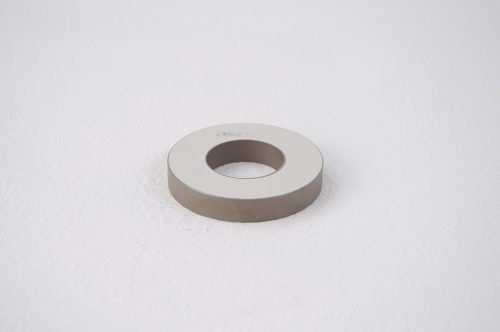
 Anillo piezocerámico Φ69~Φ70mm
$20.00
Anillo piezocerámico Φ69~Φ70mm
$20.00
-
28kHz 600Watt F25-SA-1
Original price was: $220.00.$184.00Current price is: $184.00.
-
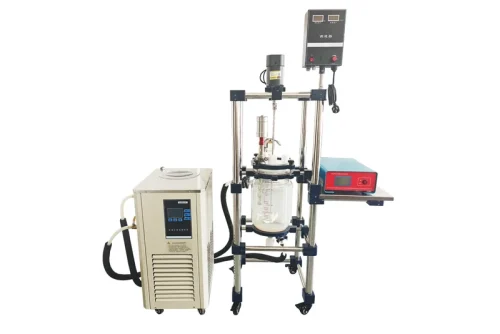
 SONOBIO 30L Ultrasonic Homogenizer Double-Layer Glass Reactor
Original price was: $10,000.00.$7,000.00Current price is: $7,000.00.
SONOBIO 30L Ultrasonic Homogenizer Double-Layer Glass Reactor
Original price was: $10,000.00.$7,000.00Current price is: $7,000.00.
-
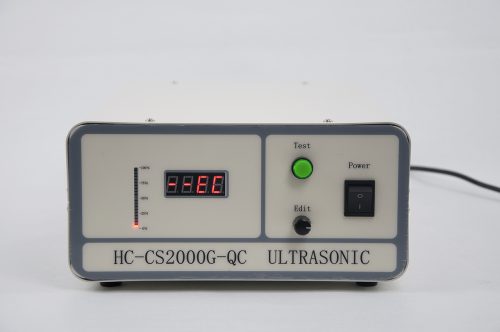
15kHz 2600Watt Generador ultrasónico
Original price was: $960.00.$800.00Current price is: $800.00.
-
40kHz 800Watt F25ST1
Original price was: $250.00.$220.00Current price is: $220.00.
-
Anillo piezocerámico Φ55mm
Original price was: $14.00.$11.50Current price is: $11.50.
-
Anillo piezocerámico Φ38mm
Original price was: $6.00.$5.00Current price is: $5.00.
-
TelSonic Replacement 20kHz 3200Watt
Original price was: $390.00.$350.00Current price is: $350.00.
-
 20kHz 2000Watt Spot Welding Set
Original price was: $300.00.$260.00Current price is: $260.00.
20kHz 2000Watt Spot Welding Set
Original price was: $300.00.$260.00Current price is: $260.00.
-
35kHz 900Watt F30-SA-P
Original price was: $250.00.$207.00Current price is: $207.00.
-
TelSonic Replacement 20kHz 4500Watt
Original price was: $390.00.$350.00Current price is: $350.00.
-
Weber 35kHz 1200watt Replacement
Original price was: $280.00.$250.00Current price is: $250.00.
-
Anillo piezocerámico Φ45~Φ49mm
Price range: $5.00 through $9.50
-
28kHz 600Watt F30-SA-1
Original price was: $208.00.$184.00Current price is: $184.00.
-
20kHz Booster; Gain 1:3
Original price was: $180.00.$165.00Current price is: $165.00.