
Sino Sonics · Impedance analysis
PV520A Impedance Analyzer for Piezoelectric Ceramics and Ultrasonic Transducers
The PV520A series is a portable impedance analyzer for piezoelectric ceramics and ultrasonic transducers, developed jointly by the Department of Automation at Tsinghua University and the Institute of Acoustics, Chinese Academy of Sciences. It combines the full software of the earlier PV70A-P with a standalone 7.8″ touch screen.
Key facts
- Models: PV520A-S (1 kHz–1 MHz), PV520A-T (1 kHz–3 MHz), PV520A-V (1 kHz–5 MHz)
- Accuracy: ±0.04% (S, T), ±0.02% (V) · frequency accuracy ±10 ppm · phase resolution 0.15°
- Speed: 5 seconds per 1,000-point sweep
- Prices: from $2,350 (S) · $2,750 (T) · $3,650 (V)
- Operation: 7.8″ touch screen and computer connection with full software support
- Cited in peer-reviewed papers in Sensors and Coatings (MDPI)
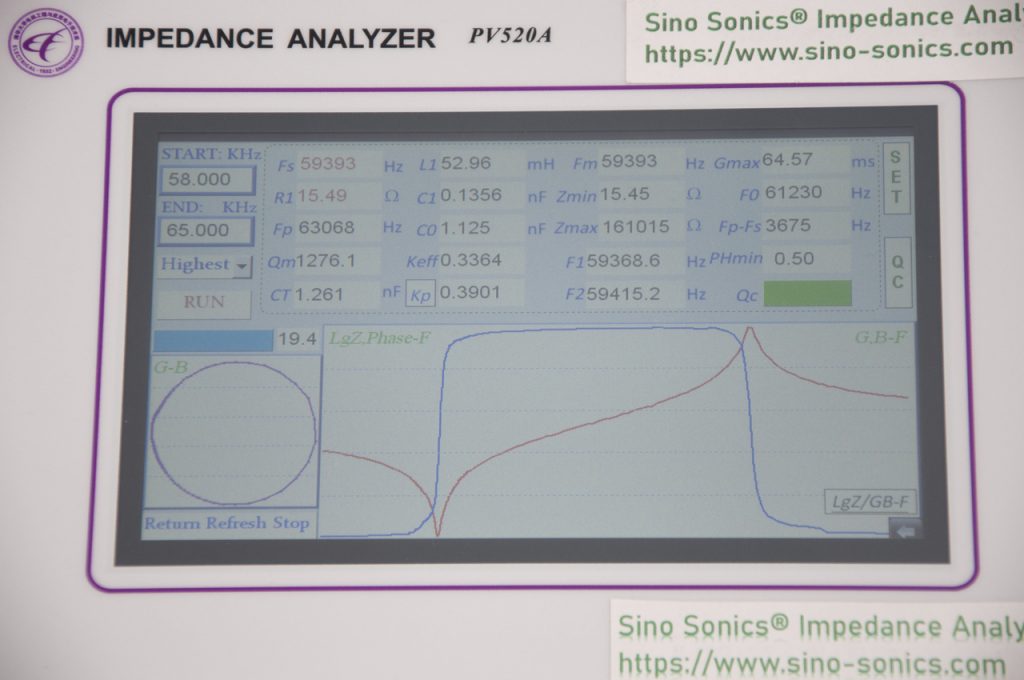
PV520A Models: S, T and V
All three models start at 1 kHz and cover the same 1 Ω to 1 MΩ impedance range. The upper frequency limit and basic accuracy determine which model fits your measurements. Prices are in US dollars. Select a model to see its current price on the product page.
PV520A-T
- 1 kHz – 3 MHz
- ±0.04% accuracy
- For sweeps above 1 MHz and up to 3 MHz
How to choose a model
| Required sweep or accuracy | Model | Basic accuracy |
|---|---|---|
| Up to 1 MHz | PV520A-S | ±0.04% |
| Above 1 MHz and up to 3 MHz | PV520A-T | ±0.04% |
| Above 3 MHz and up to 5 MHz, or when you need ±0.02% | PV520A-V | ±0.02% |
For help choosing, send Sino Sonics the part type, its expected resonance frequencies and the highest frequency you plan to scan. For a multi-frequency transducer, include all the frequencies you want to check.
Buy it NOW !What the PV520A Measures
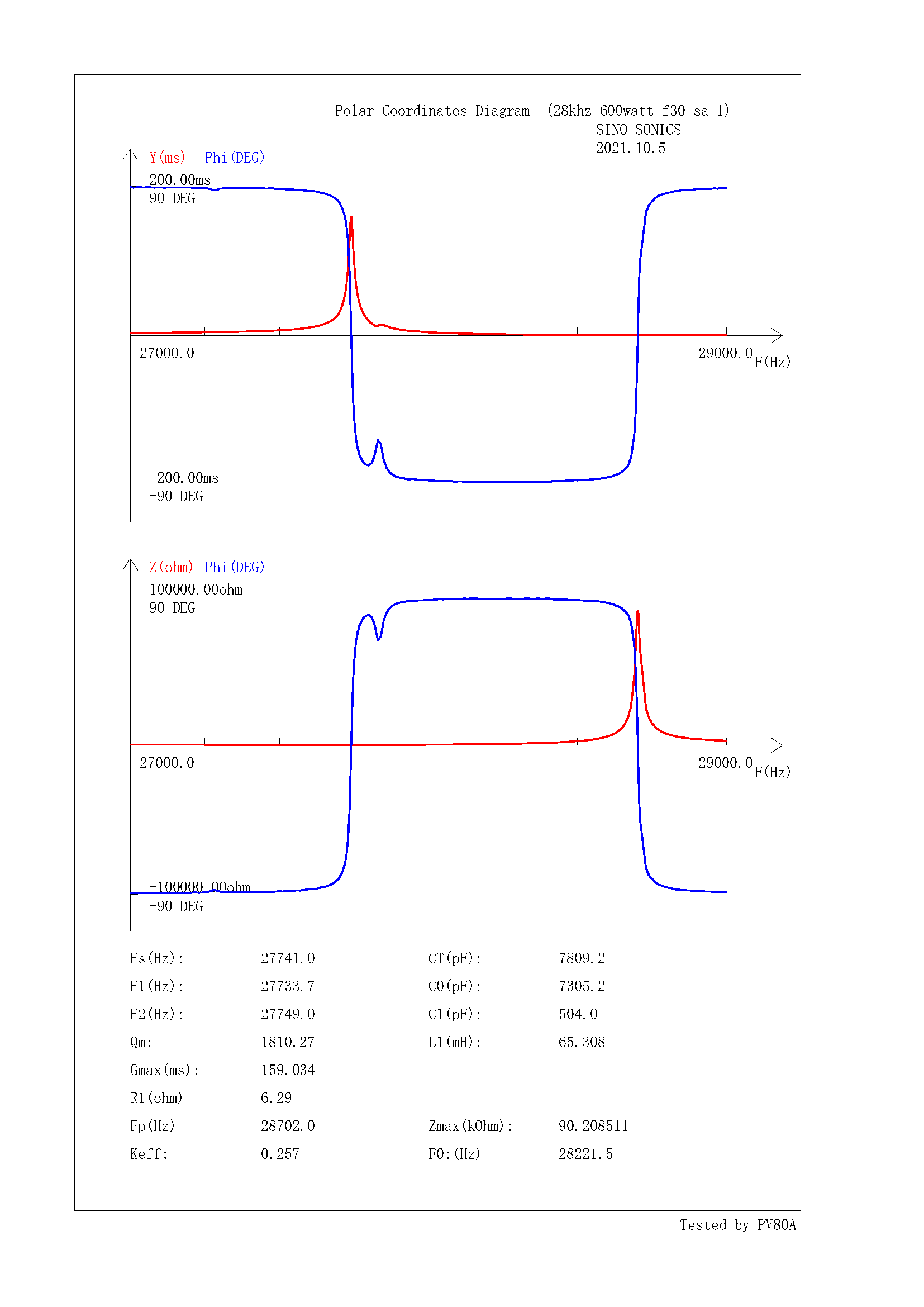
A frequency sweep shows how the part responds across the selected range. Use the resonance and anti-resonance readings to locate Fs and Fp, and consult the admittance curve and the half-power points when reviewing the response around resonance. The instrument also reports capacitance, equivalent-circuit parameters and coupling coefficients.
Frequency accuracy, phase resolution and basic accuracy describe different parts of the measurement. All three models specify ±10 ppm frequency accuracy and 0.15° phase resolution. The model comparison above shows the separate basic accuracy specification.
What Can You Test?
For incoming inspection or production-line checks on piezoelectric ceramics, use the ceramic testing guide to review the test setup and measurements. When you are checking a cleaning or welding transducer, the transducer guide walks through the frequency sweep and how to read the result. The example plots further down the page show the kinds of output you can review.
Details & Specifications
The table lists the published specifications by model. Swipe or scroll sideways on a narrow screen to compare all three. The 5-second scan time refers to a 1,000-point sweep. The frequency step starts at 0.1 Hz and can be set for the sweep.
| Specification | Type: PV520A-S | Type: PV520A-T | Type: PV520A-V |
|---|---|---|---|
| Feature | Portable, 7.8″ touch screen | Portable, 7.8″ touch screen | Portable, 7.8″ touch screen |
| Size: | length: 24cm, Width: 19cm front height: 5cm, back height: 10cm | length: 24cm, Width: 19cm front height: 5cm, back height: 10cm | length: 24cm, Width: 19cm front height: 5cm, back height: 10cm |
| Frequency range | 1KHz~1MHz | 1KHz~3MHz | 1KHz~5MHz |
| Measurement parameters |
| ||
| Basic accuracy | +/-0.04% | +/-0.04% | +/-0.02% |
| Frequency accuracy | ±10ppm | ±10ppm | ±10ppm |
| Phase resolution | 0.15° | 0.15° | 0.15° |
| Test environment temperature | 10~40℃ | 10~40℃ | 10~40℃ |
| Test speed | 5 sec/one (1000point sweeping) | 5 sec/one (1000point sweeping) | 5 sec/one (1000point sweeping) |
| Impedance Range | 1Ω~1MΩ | 1Ω~1MΩ | 1Ω~1MΩ |
| Frequency Step | 0.1Hz~Any | 0.1Hz~Any | 0.1Hz~Any |
| Power supply | AC100V~AC250V,50~60Hz, 30W | AC100V~AC250V,50~60Hz, 30W | AC100V~AC250V,50~60Hz, 30W |
| Display | 7.8″ touch screen | 7.8″ touch screen | 7.8″ touch screen |
| Connection | Computer connection with full software | Computer connection with full software | Computer connection with full software |
| Order | Buy Now PV520A-S | Buy Now PV520A-T | Buy Now PV520A-V |
Developed with Tsinghua University and the Chinese Academy of Sciences
Four Pillars of Excellence
- Pioneering Technology: A product of collaboration between Tsinghua University and the Chinese Academy of Sciences.
- Proven Legacy: Since 2001, our PV60A/70A series has been the industry standard, trusted by thousands of customers.
- Reliable Performance: Extensively used and tested by over two hundred university research institutes, our instruments have proven their reliability against imported Agilent instruments 4294A.
- Global Recognition: Selected by numerous German and American ultrasound application companies, our instruments are synonymous with trust and quality.
- Coatings (MDPI), 2023: ultrasonic vibration grinding of WC-10Co-4Cr coatings, using the PV520A-V. DOI: 10.3390/coatings13101788
- Sensors (MDPI), 2017: electrical impedance matching in sandwiched piezoelectric ultrasonic transducers, using the PV520A. DOI: 10.3390/s17122832
Sample Test Results and Videos
Measurement plots and exported data
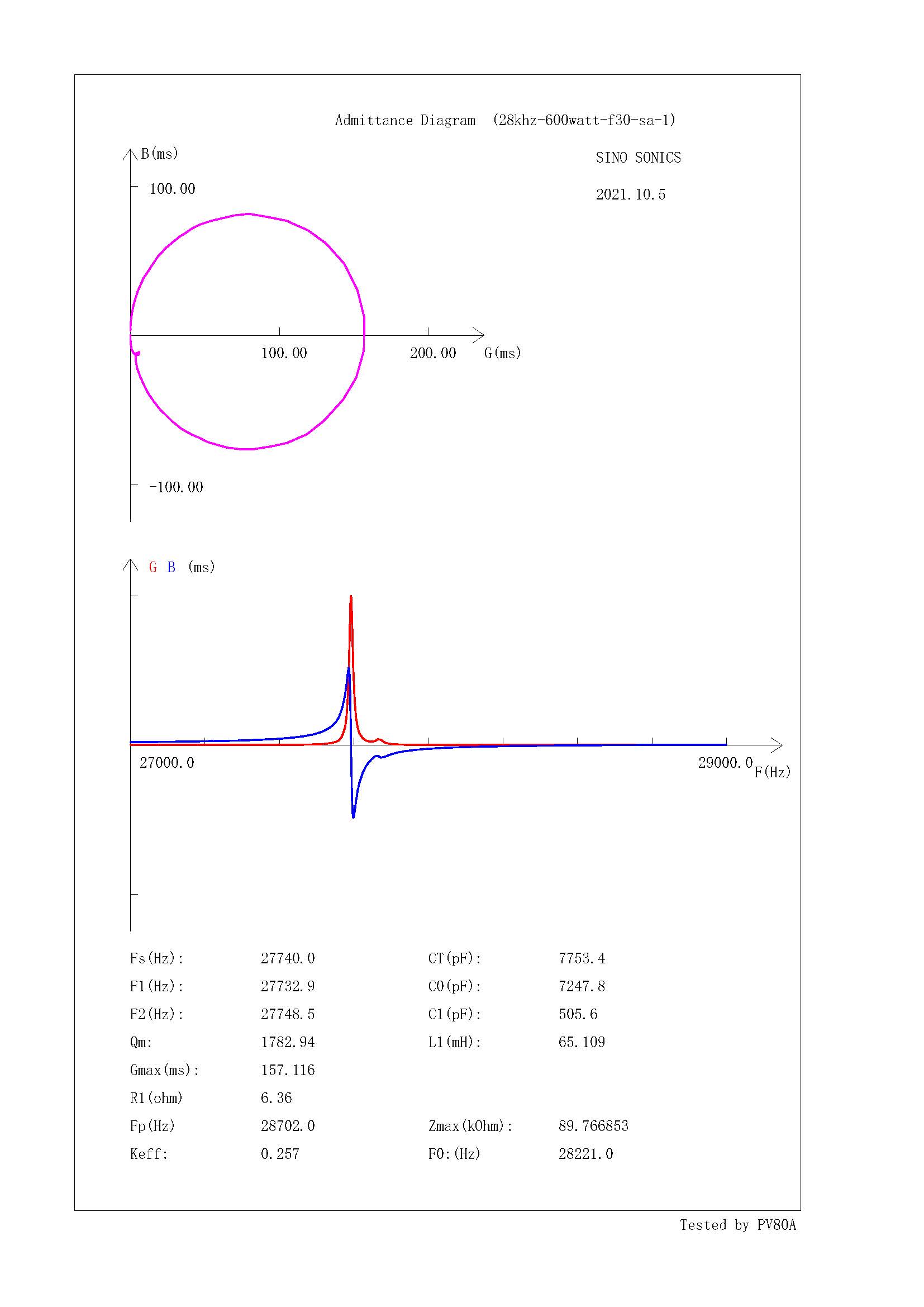
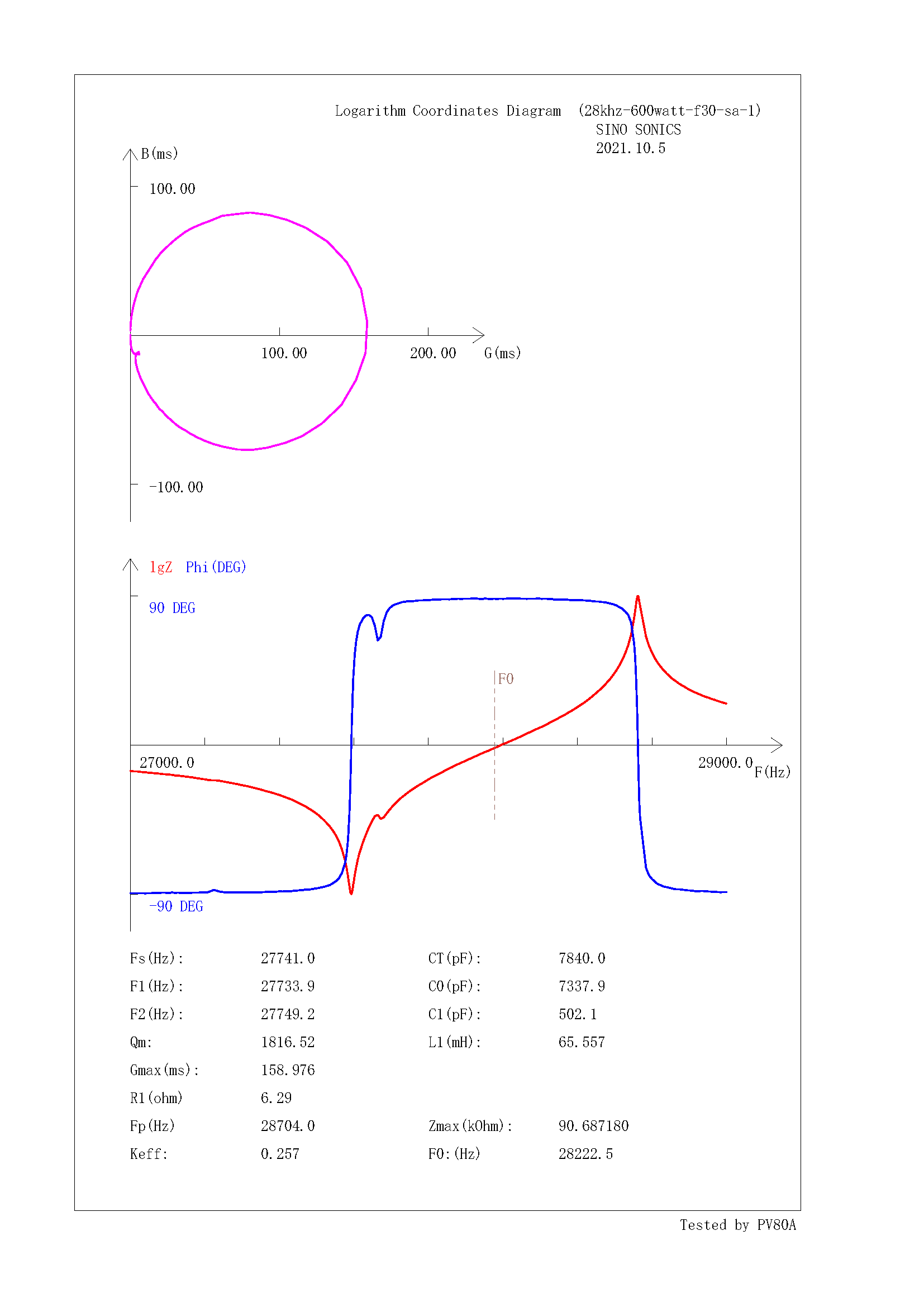
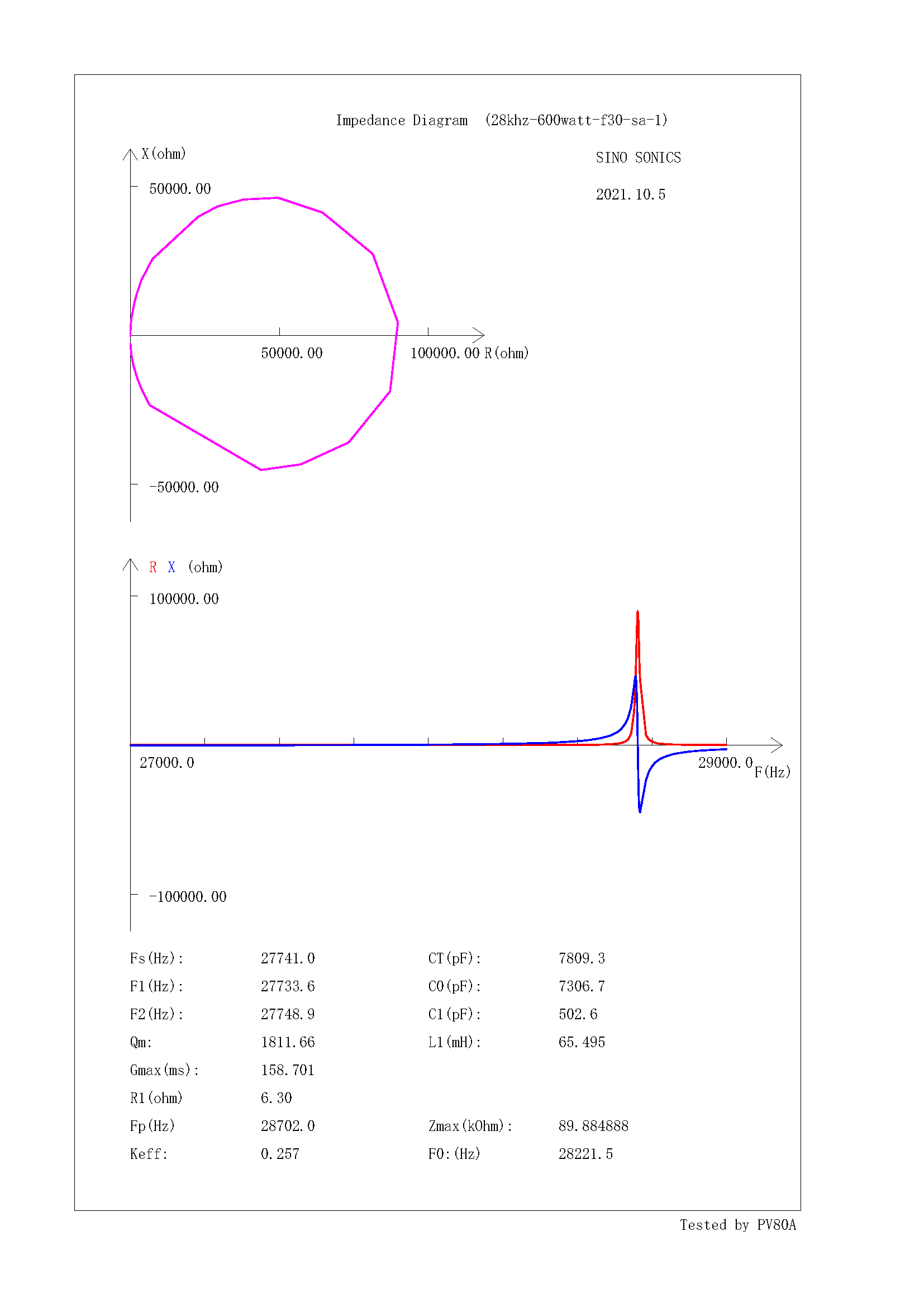
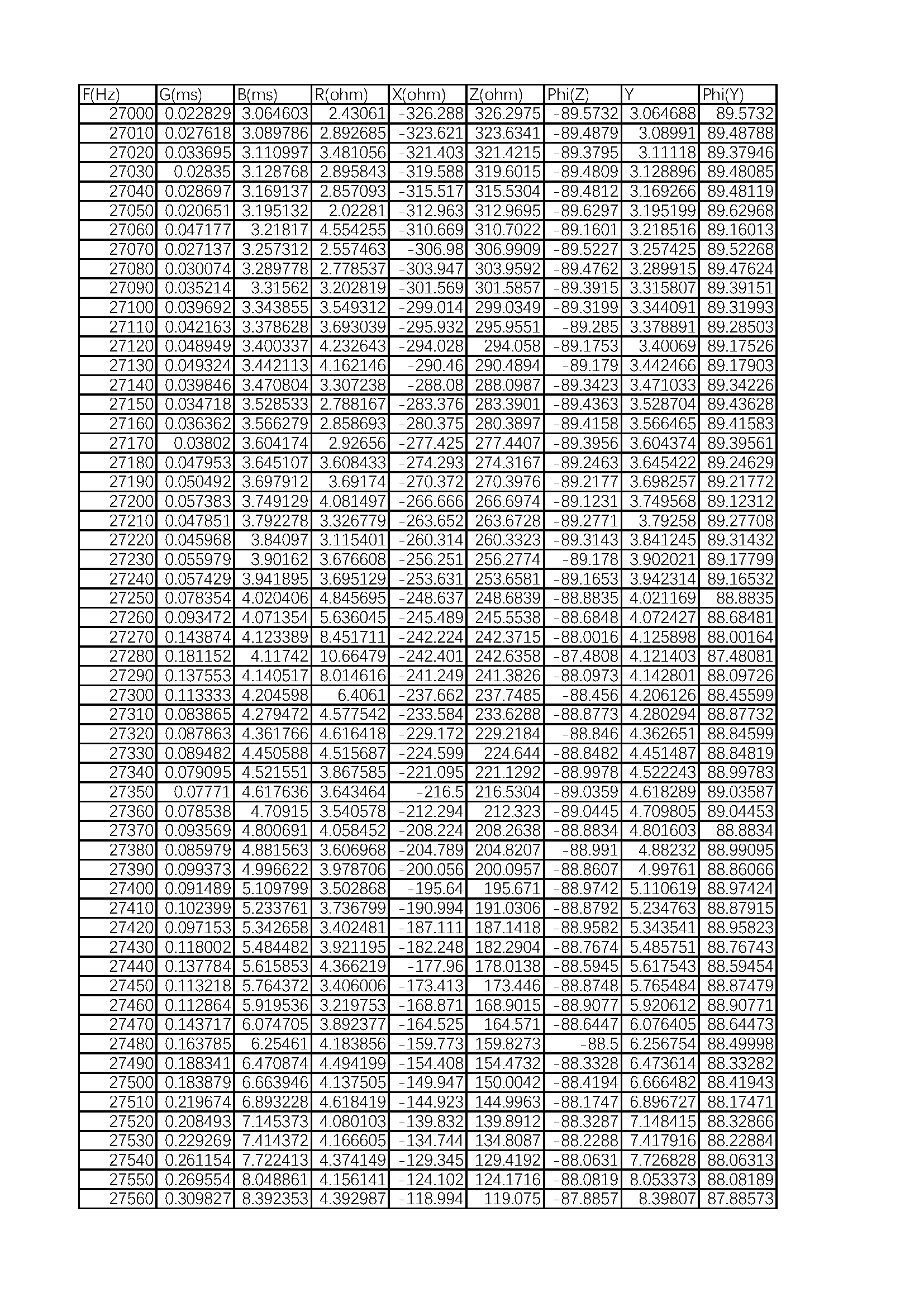
The sample pages show the PV520A output in several formats. Open an admittance or impedance example to see how the result is plotted, or compare the logarithmic and polar views. The export example shows how the measured values are arranged in a spreadsheet. Select a preview to open its full example.
Instrument and factory test photos
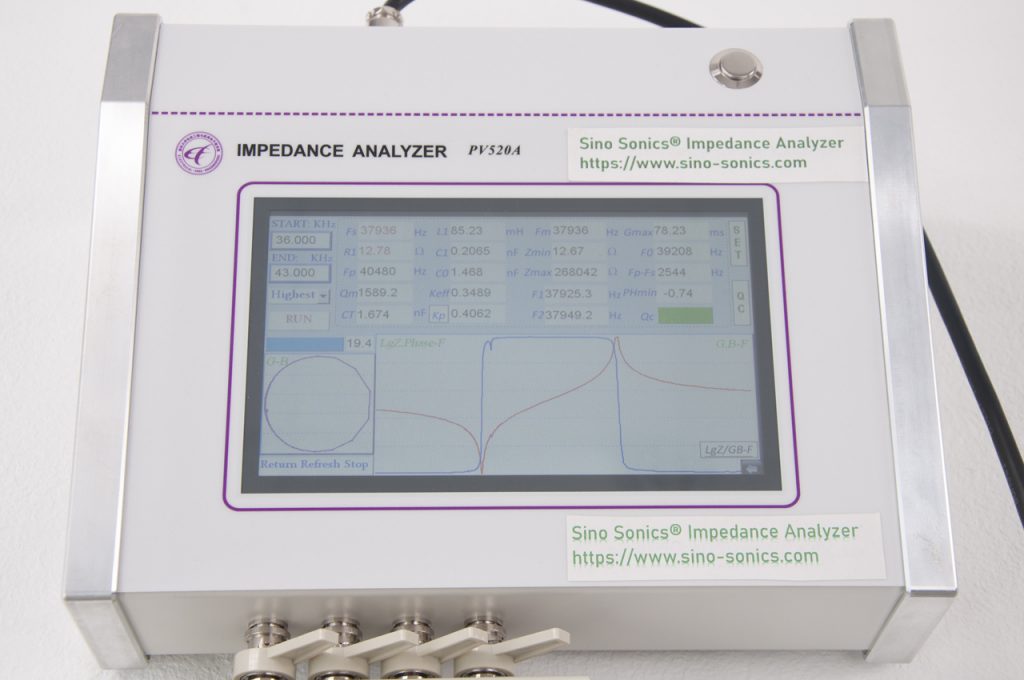
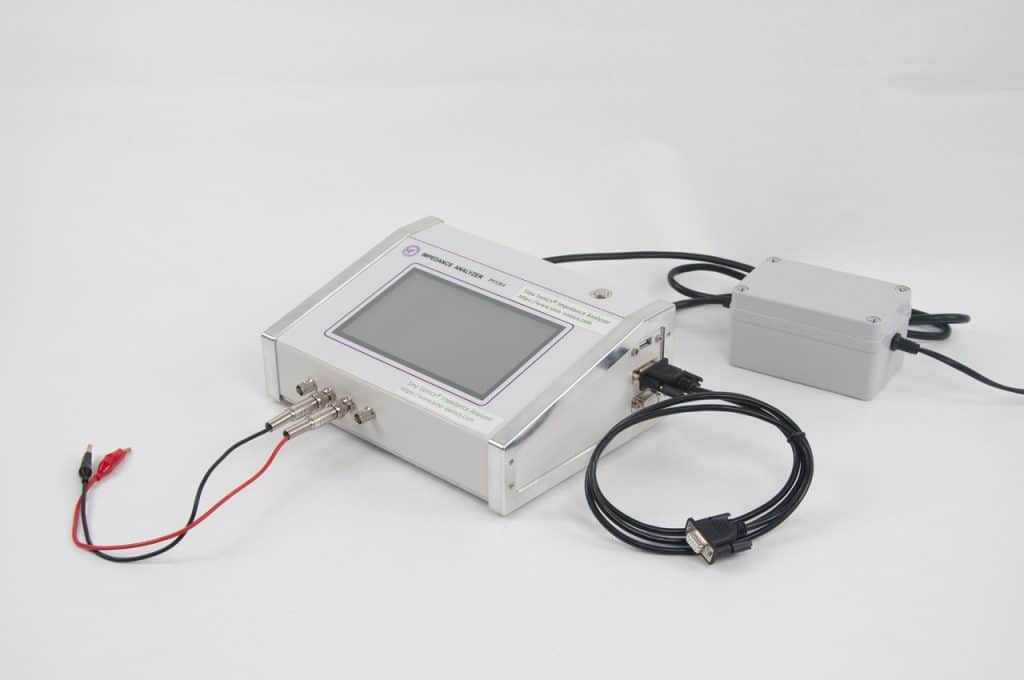
The photos show the analyzer, the component test fixture and examples of the instrument connected on a workbench. The factory views show how the equipment is arranged for checks on ultrasonic components.
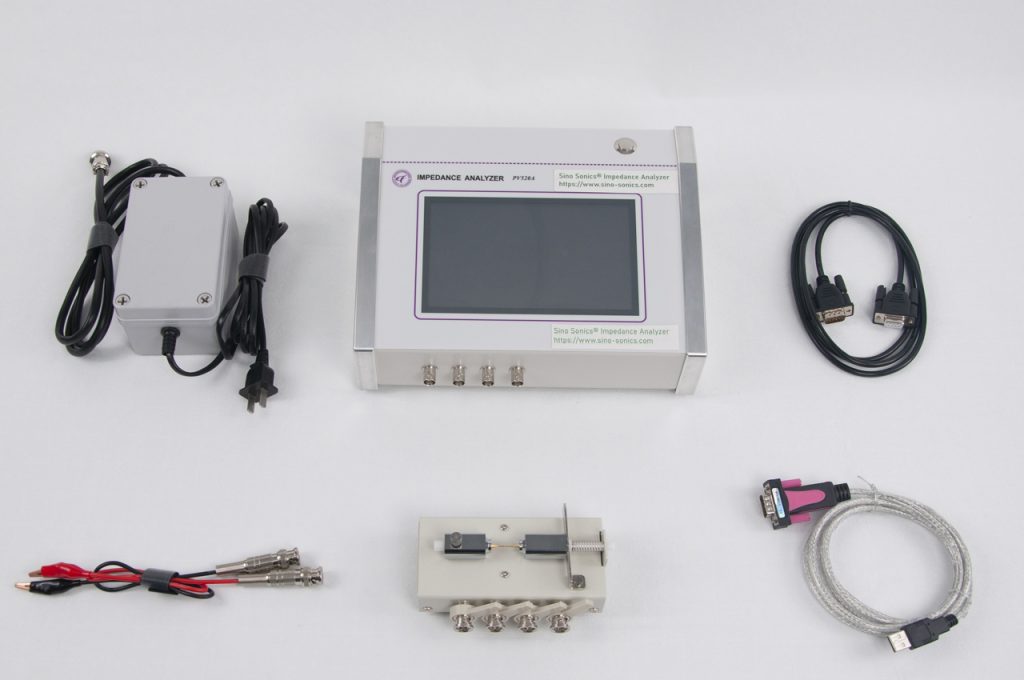

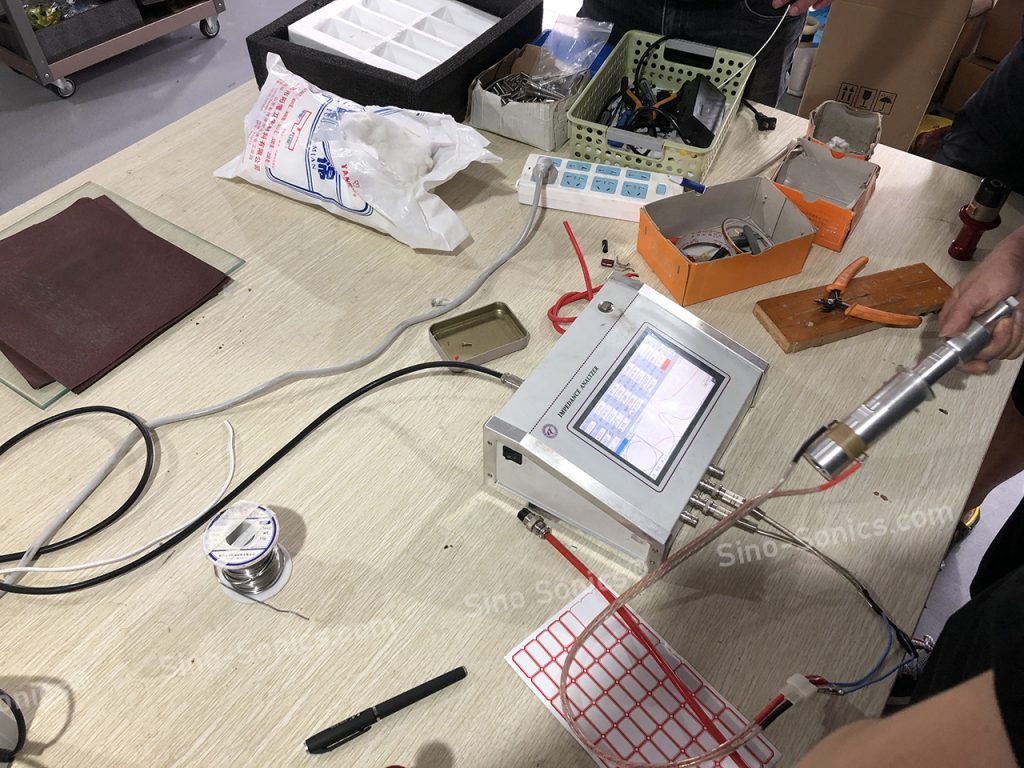
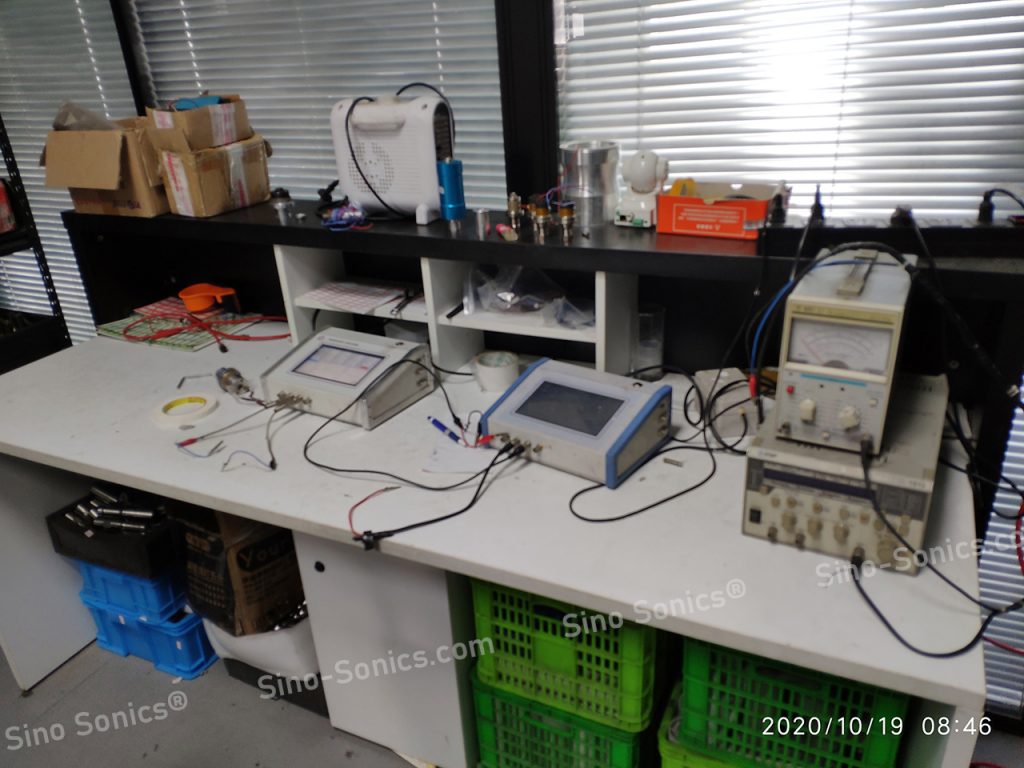
The first video introduces the instrument. The other two demonstrate separate setups for a piezoelectric ceramic chip and an ultrasonic transducer or converter. Use the demonstration that matches the part you plan to test.
PV520A overview
Testing a piezoelectric ceramic chip
Testing an ultrasonic transducer or converter
PV520A Impedance Analyzer FAQ
What is the PV520A impedance analyzer used for?
What is the difference between PV520A-S, T and V?
How much does the PV520A cost?
How fast is a measurement?
What can I test with it?
Can I use the PV520A without a computer?
What accuracy and range does it have?
How do I test an ultrasonic transducer with it?
Need a quote or help choosing a model?
Reply within 1 business day · [email protected]
WhatsApp +86 186-2632-1806Get a Quote