
Ultrasonic Homogenizer
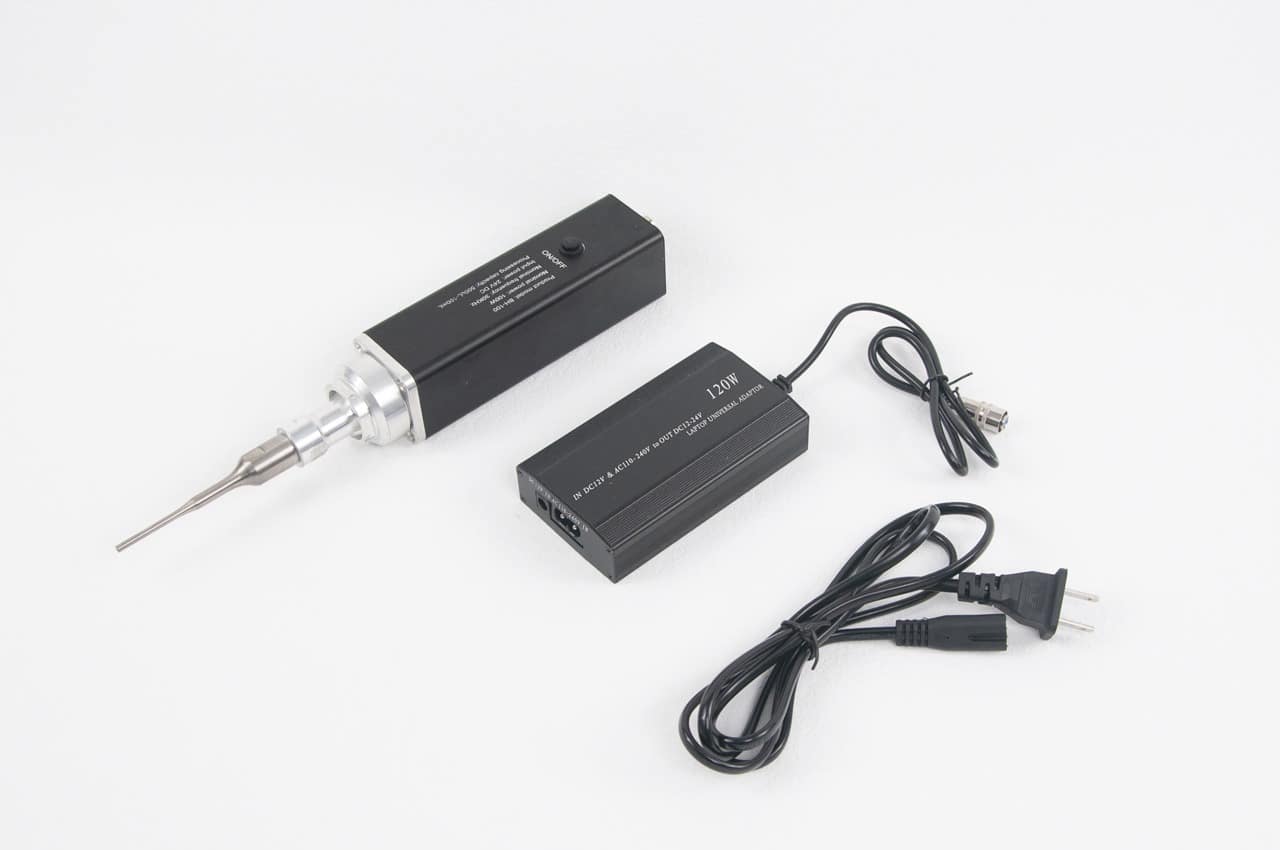
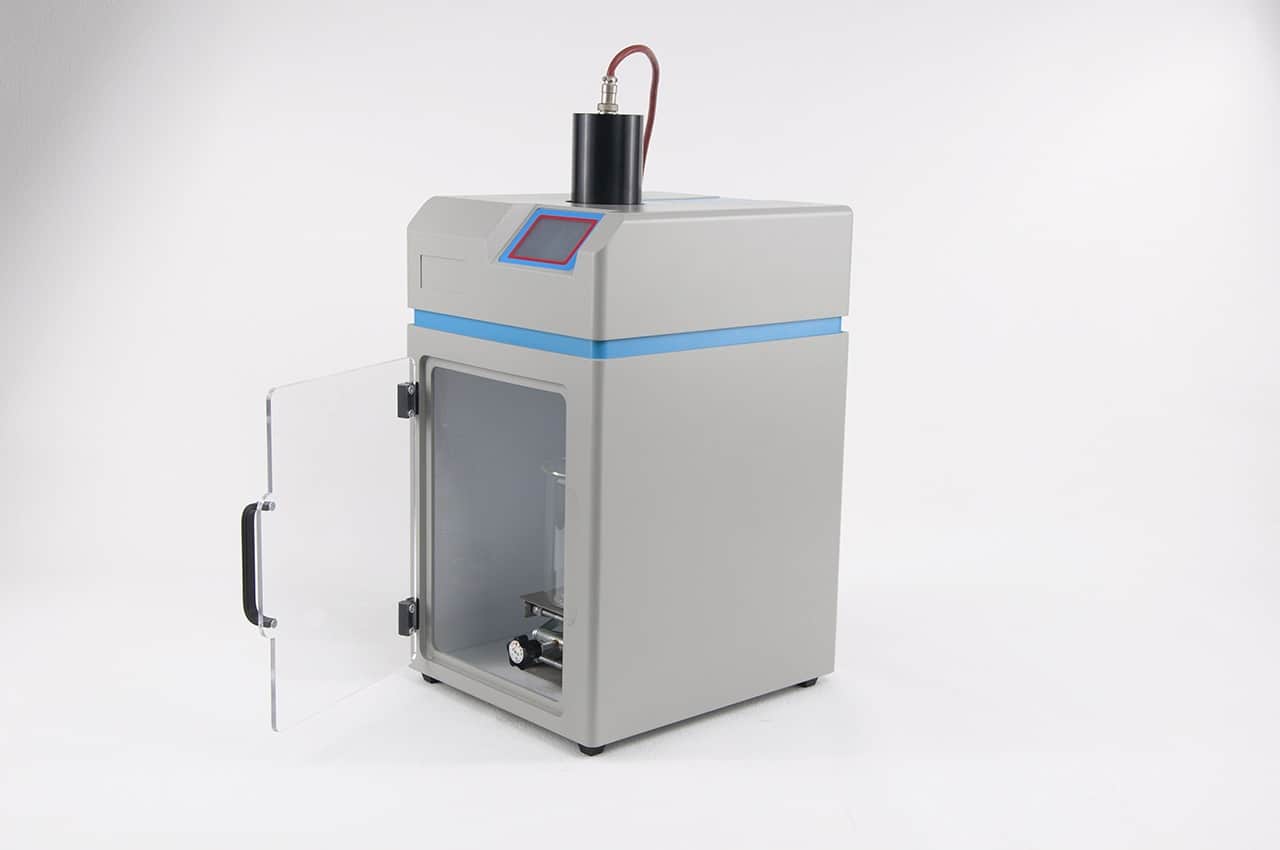
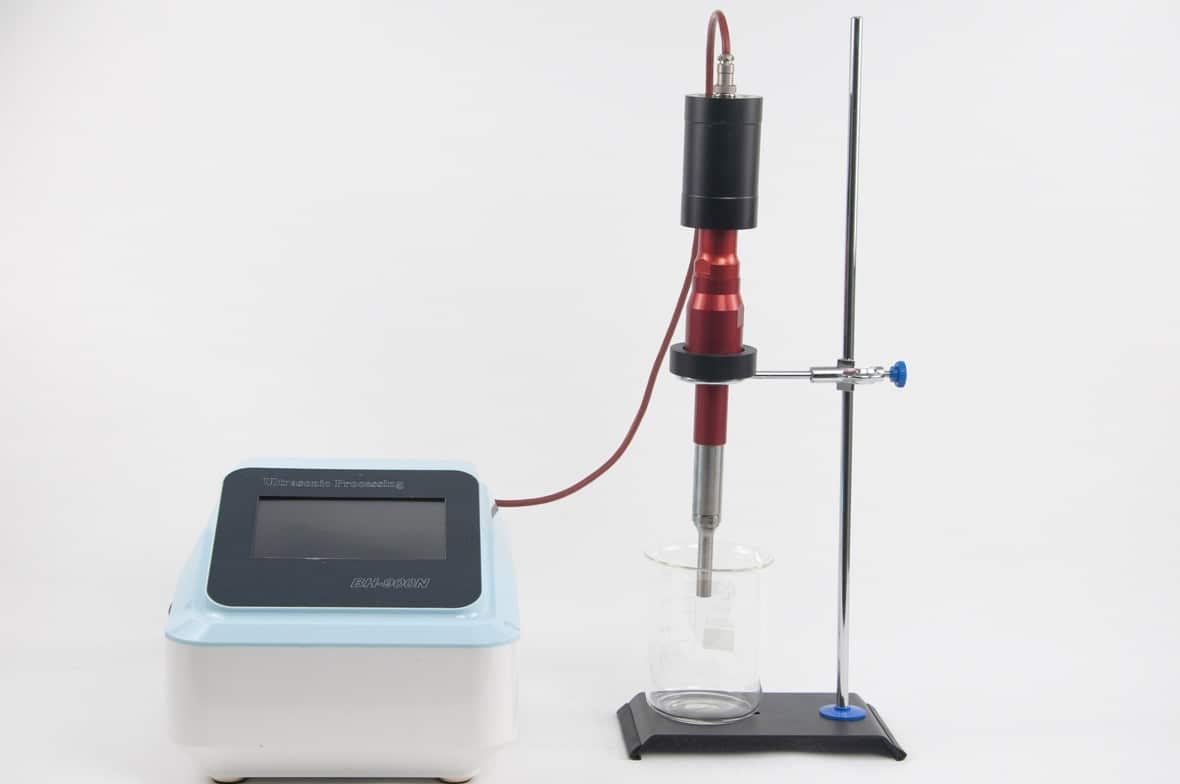
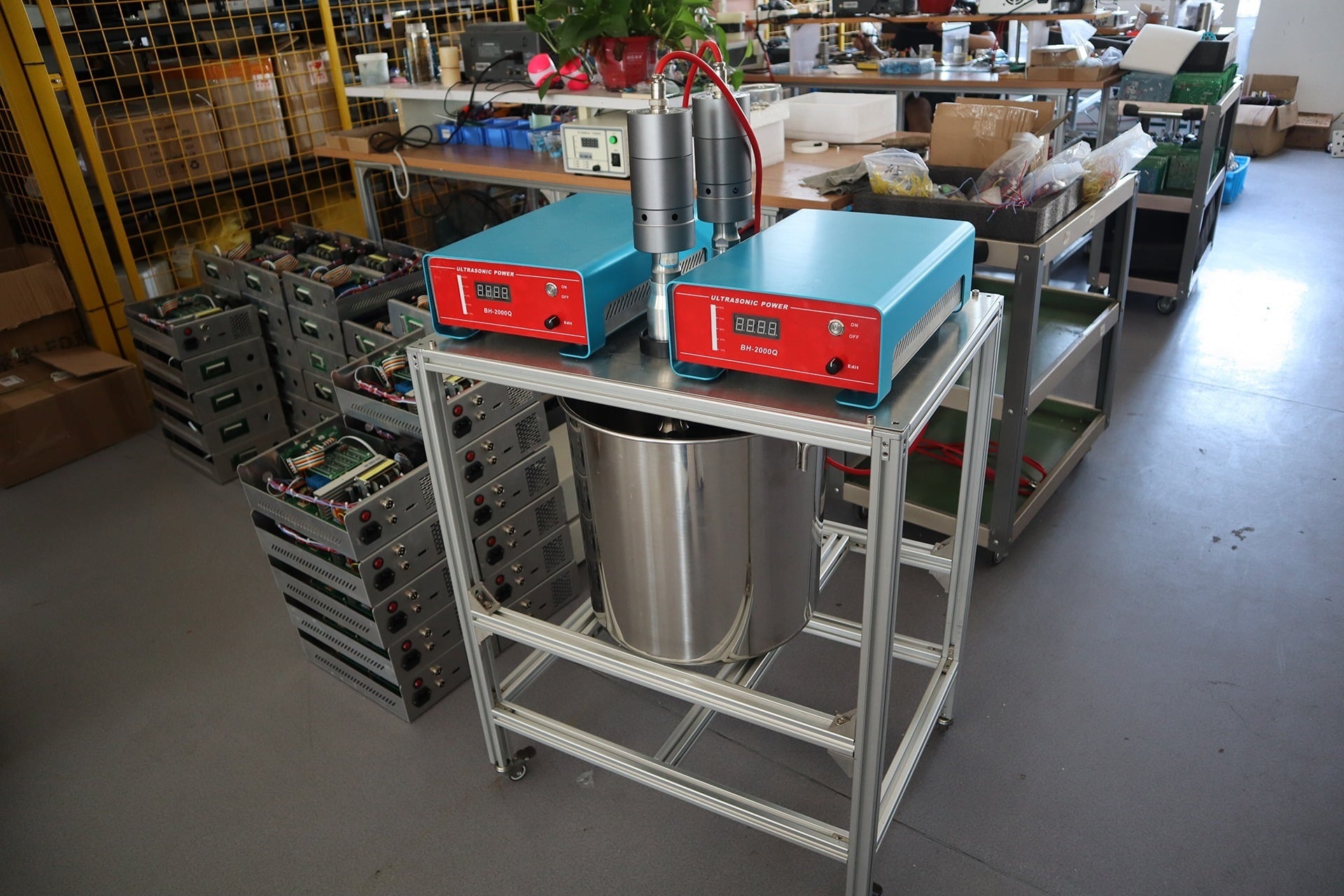
Ultrasonic Homogenizers (Sonicator): Powerhouses in the Laboratory
Ultrasonic homogenizers, also known as probe sonicators, utilize high-frequency ultrasonic cavitation to disrupt cells, disperse nanoparticles, and create stable emulsions. Operating typically at 20 kHz, these systems generate intense shear forces through rapid tip vibration, producing controlled cavitation in liquid media.
Sino Sonics ultrasonic homogenizers deliver adjustable amplitude output with power ranges from 100W to 3000W, supporting sample volumes from 0.3 mL laboratory micro-processing to 50 L industrial scale applications. Titanium alloy probes ensure durability, high energy transmission efficiency, and long service life.
Designed for precision control and repeatability, our systems allow accurate amplitude adjustment, pulse mode operation, and temperature monitoring to ensure reliable and reproducible results.
Applications
Cell Disruption & DNA Shearing
High-amplitude probe sonicators are widely used for rapid cell lysis, protein extraction, and controlled DNA/RNA fragmentation in molecular biology workflows.
By precisely adjusting amplitude and pulse parameters, fragment sizes between 200–600 bp can be achieved for sequencing and genomics research. Ultrasonic homogenizers provide efficient intracellular release while minimizing thermal damage when combined with cooling systems.
Typical applications include:
-
Bacterial and yeast cell lysis
-
Mammalian cell disruption
-
ChIP-Seq sample preparation
-
Protein extraction and purification
Nanoparticle Dispersion
Ultrasonic cavitation is highly effective for dispersing graphene, carbon nanotubes (CNTs), metal oxides, and ceramic nanoparticles.
High-intensity sonication breaks particle agglomerates, ensuring uniform particle size distribution and stable suspensions. This is essential for nanomaterials, conductive inks, coatings, battery materials, and advanced composites.
Probe diameters from 2 mm to 40 mm allow optimization based on viscosity and particle concentration.
Emulsification & Mixing
Ultrasonic homogenizers efficiently blend immiscible liquids such as oil and water, forming fine nano-emulsions with improved stability and bioavailability.
Applications include:
-
Pharmaceutical formulations
-
Cosmetic emulsions
-
Food processing
-
Cannabis extraction and tinctures
Compared with traditional mechanical homogenizers, ultrasonic systems achieve smaller droplet sizes and enhanced emulsion stability.
Industrial & Chemical Applications
Beyond laboratory use, industrial ultrasonic homogenizers support scalable processes such as:
-
Sonochemistry reactions
-
Degassing and defoaming
-
Wastewater treatment
-
Large-scale emulsification
Industrial models support continuous processing and integration into automated production lines, delivering consistent ultrasonic energy output for demanding applications.
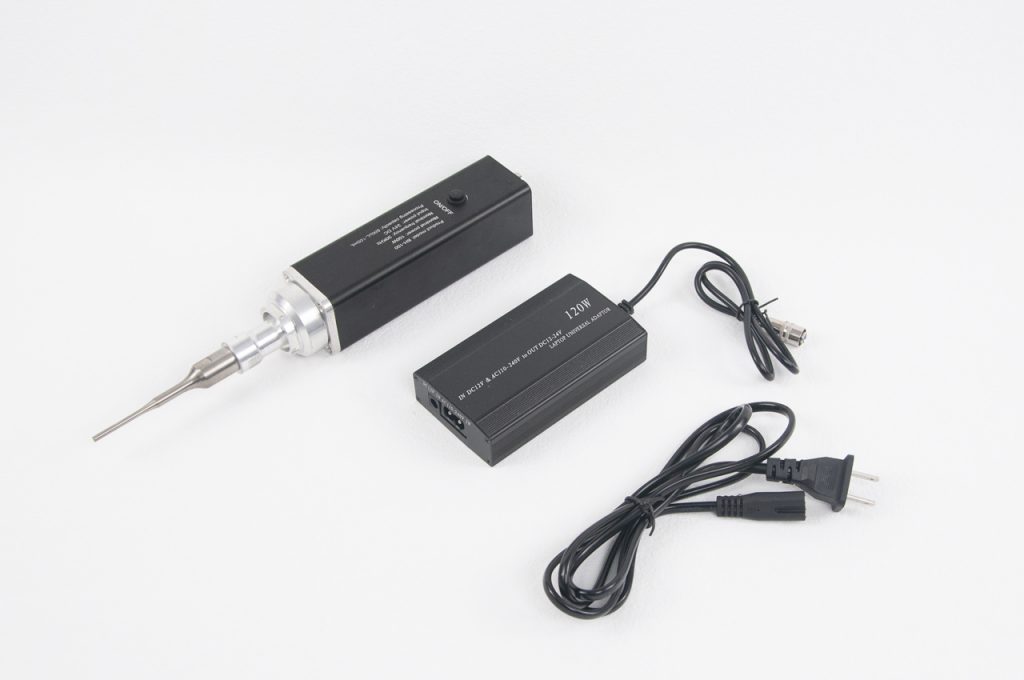
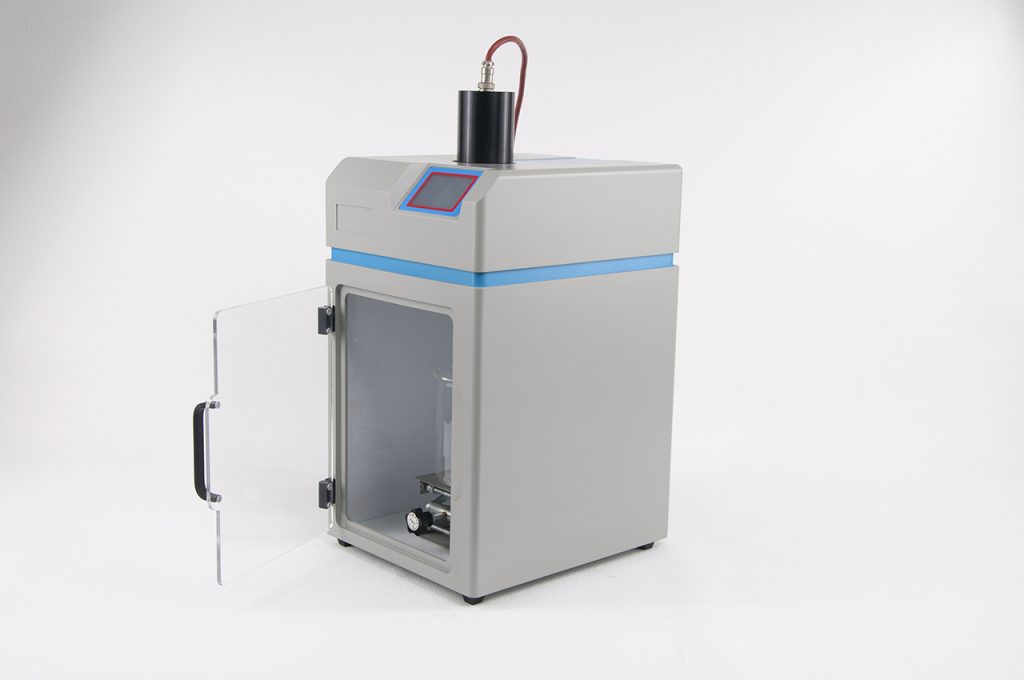
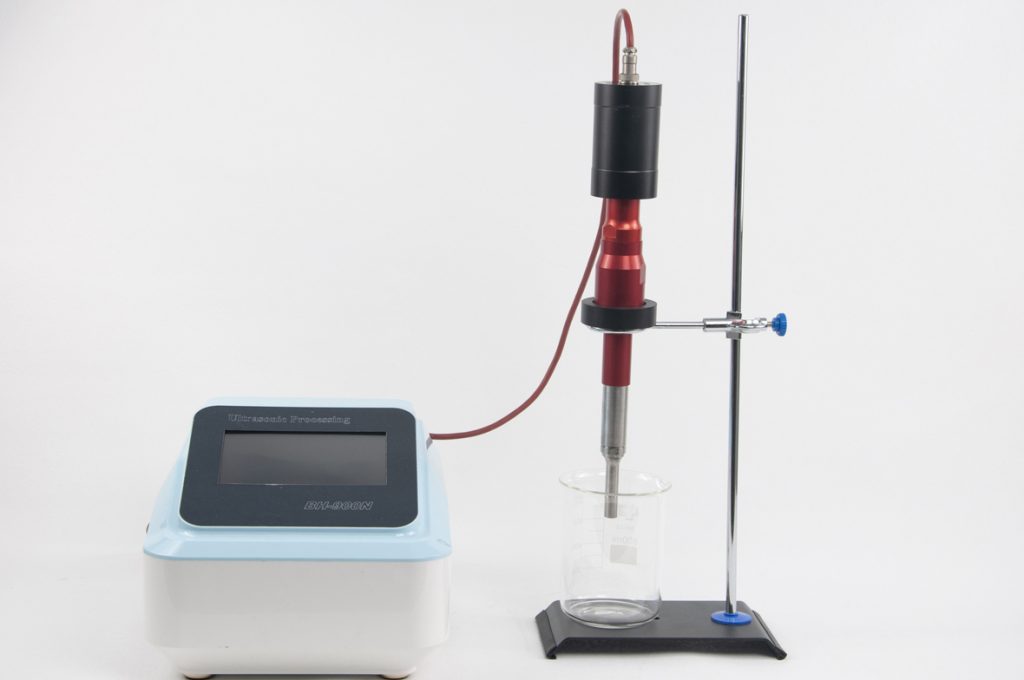
Ultrasonic Homogenizer
About SinoSonics® and SONOBIO® Ultrasonic Homogenizers
Sino Sonics is a professional ultrasonic technology manufacturer in China, specializing in high-performance SONOBIO® ultrasonic homogenizers (probe sonicators).
Our systems operate typically at 20 kHz with adjustable amplitude control, delivering reliable cavitation for laboratory and industrial applications. Power ranges from 100W to 3000W, supporting sample volumes from 0.3 mL up to 50 L.
We provide OEM/ODM solutions, custom titanium probes (2–40 mm), and integration options including flow-through systems and temperature control units.
Applications of SONOBIO® Ultrasonic Homogenization
Ultrasonic homogenization enables efficient liquid-liquid and liquid-solid processing through controlled cavitation and high shear intensity.
Typical Applications
-
Cell disruption (bacteria, yeast, mammalian cells)
-
DNA/RNA fragmentation (e.g. 200–600 bp range)
-
Protein extraction and lysis
-
Nanoparticle dispersion (graphene, CNTs, metal oxides)
-
Nano-emulsion production
-
Degassing and sonochemical reactions
SONOBIO® Product Range
We offer optimized ultrasonic homogenizers for different scales:
-
Laboratory Type (small-volume precision processing)
-
Industrial Type (continuous and high-volume operation)
-
Integrated Systems (automated production line solutions)
All systems support adjustable amplitude, pulse mode, and interchangeable titanium probes.
Why Choose SinoSonics®
-
High amplitude output for efficient cavitation
-
Custom probe diameters and configurations
-
OEM / ODM manufacturing capability
-
Reliable industrial-grade components
-
Technical support and global export experience
Frequently Asked Questions
What is the difference between an ultrasonic homogenizer and an ultrasonic bath?
Ultrasonic baths provide indirect energy transfer with relatively low power density.
Probe sonicators deliver direct ultrasonic energy through a titanium probe, achieving significantly higher amplitude and cavitation intensity for rapid cell disruption and nanoparticle dispersion.
Is power (W) or amplitude more important?
Power (W) reflects generator capacity.
Amplitude (µm) determines cavitation intensity at the probe tip.
For demanding applications such as tough cell walls or nanoparticle deagglomeration, higher amplitude (>60–80 µm) is often more critical than nominal power rating.
How do I select the correct probe diameter?
Probe diameter depends on:
-
Sample volume
-
Viscosity
-
Particle concentration
Smaller probes (2–6 mm) are suitable for micro-volume processing.
Larger probes (20–40 mm) are designed for higher throughput and industrial scale applications.
What information is required for quotation?
To recommend the appropriate system, please provide:
-
Application type (lysis, dispersion, emulsification, etc.)
-
Sample volume per batch
-
Operating mode (batch or continuous flow)
-
Viscosity and solid content
-
Temperature sensitivity
-
Required throughput
For further information about ultrasonic homogenizers for sample preparation, or if you have any questions,
feel free to contact us:
Phone: +86-186-2632-1806
Email: [email protected]