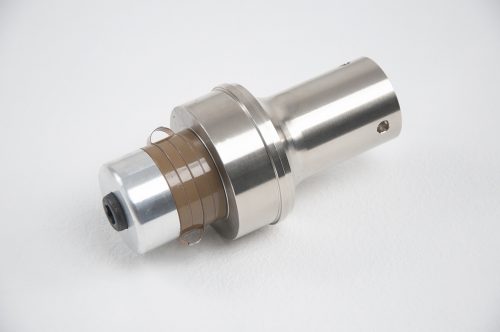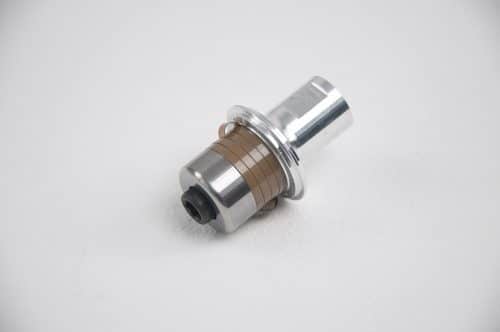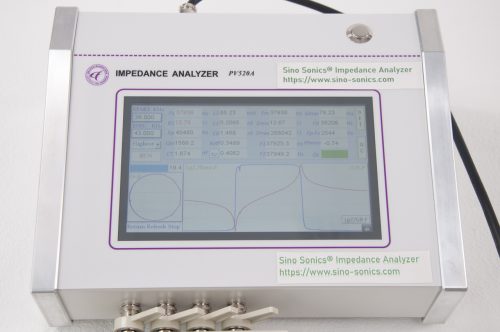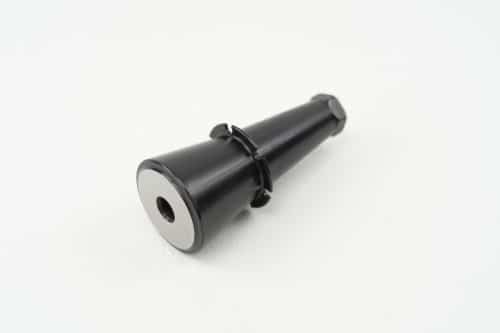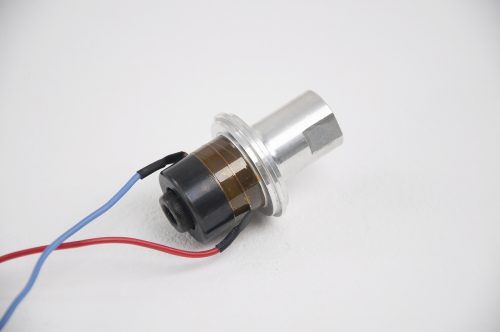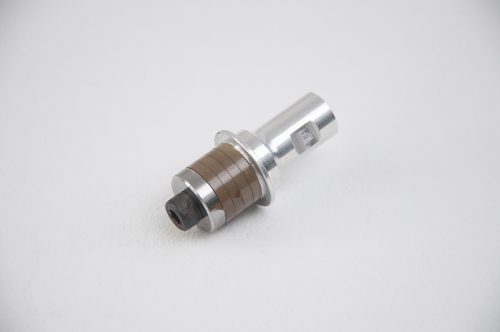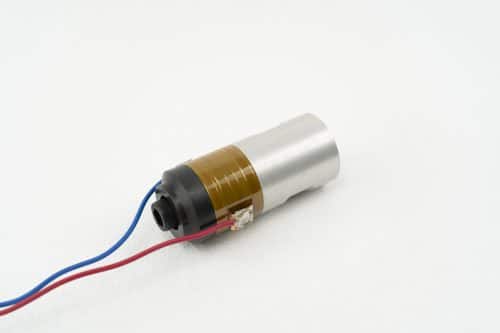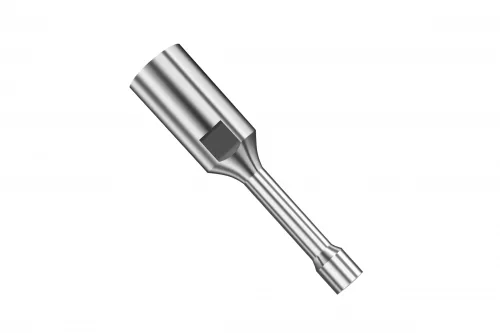
An ultrasonic homogenizer turned out to be the linchpin in a recent colon cancer drug delivery breakthrough. Colon cancer remains one of the most challenging gastrointestinal malignancies to treat with conventional chemotherapy. Capecitabine — an oral prodrug of 5-fluorouracil — is widely prescribed, but its efficacy is limited by poor solubility, premature systemic exposure, and damage to healthy intestinal cells before the drug reaches its target site. A 2024 study by Bhattacharya, Page, and Shinde at NMIMS School of Pharmacy & Technology Management (India) addressed exactly this problem by encapsulating capecitabine into biodegradable nanoparticles modified with potato starch and chitosan — and ultrasonic homogenization played a central role in achieving the particle size and drug-loading efficiency required for targeted colon delivery.
This Application Spotlight breaks down the methodology, explains why a Sino Sonics Integrated Ultrasonic Homogenizer was the right tool for this synthesis, and discusses what other nanoparticle research groups can learn from the approach.
The Research: Why Capecitabine Nanoparticles Matter
Standard oral capecitabine has a major weakness: most of the dose dissolves and absorbs in the upper GI tract, never reaching the colon where it is most needed. Encapsulating the drug in a polysaccharide-based nanoparticle that survives gastric and small-intestinal transit, then releases the payload selectively in the colon, is a long-standing pharmaceutical goal.
Bhattacharya and colleagues approached this with a two-step nanoparticle design:
- Core: capecitabine (CTB) molecules
- Shell layer 1: potato starch (biodegradable, broken down by colonic bacteria)
- Shell layer 2: chitosan (mucoadhesive, pH-responsive)
The combination is engineered so the nanoparticle is stable in the stomach (low pH, no enzymatic breakdown), passes through the small intestine intact, and only releases capecitabine when it reaches the colonic environment where chitosanase and amylolytic enzymes break down the carrier.
The resulting nanoparticles were evaluated for physical properties (size distribution, zeta potential, morphology), in vitro drug release kinetics, cytotoxicity in HT-29 colon cancer cell lines, and in vivo biodistribution in animal models.
Why 45-Minute Pulsed Sonication Was the Critical Step
Nanoparticle synthesis depends on tight control of particle size — and in this research, the 45-minute ultrasonication step at 5-minute pulsed intervals was where particle quality was determined.
Three reasons this step is non-trivial:
1. Particle size uniformity. For a colon-targeted nanoparticle, the size needs to fall in the 100–300 nm window. Too large, and intestinal mucus traps them; too small, and they cross into systemic circulation prematurely. Achieving narrow polydispersity (PDI < 0.3) requires consistent acoustic cavitation energy delivery, which is exactly what a calibrated ultrasonic probe provides.
2. Drug encapsulation efficiency. Capecitabine is moderately water-soluble, which means the drug can leak out of the nanoparticle during synthesis if the carrier matrix isn’t formed quickly and tightly. Pulsed sonication (5 minutes on, brief rest, repeat for 45 minutes total) generates enough cavitation to accelerate matrix self-assembly without overheating the drug payload.
3. Polysaccharide matrix integrity. Both potato starch and chitosan are heat-sensitive at high temperatures. Continuous high-power sonication would denature them. The pulsed protocol — possible only with a probe sonicator that gives the operator second-by-second control — keeps the matrix intact while still delivering enough mechanical energy for nanoparticle formation.
This is the kind of methodological precision where the choice of ultrasonic homogenizer materially affects publishable results.
The Sino Sonics Integrated Ultrasonic Homogenizer in This Study
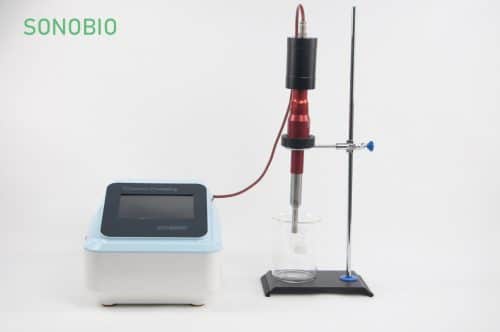
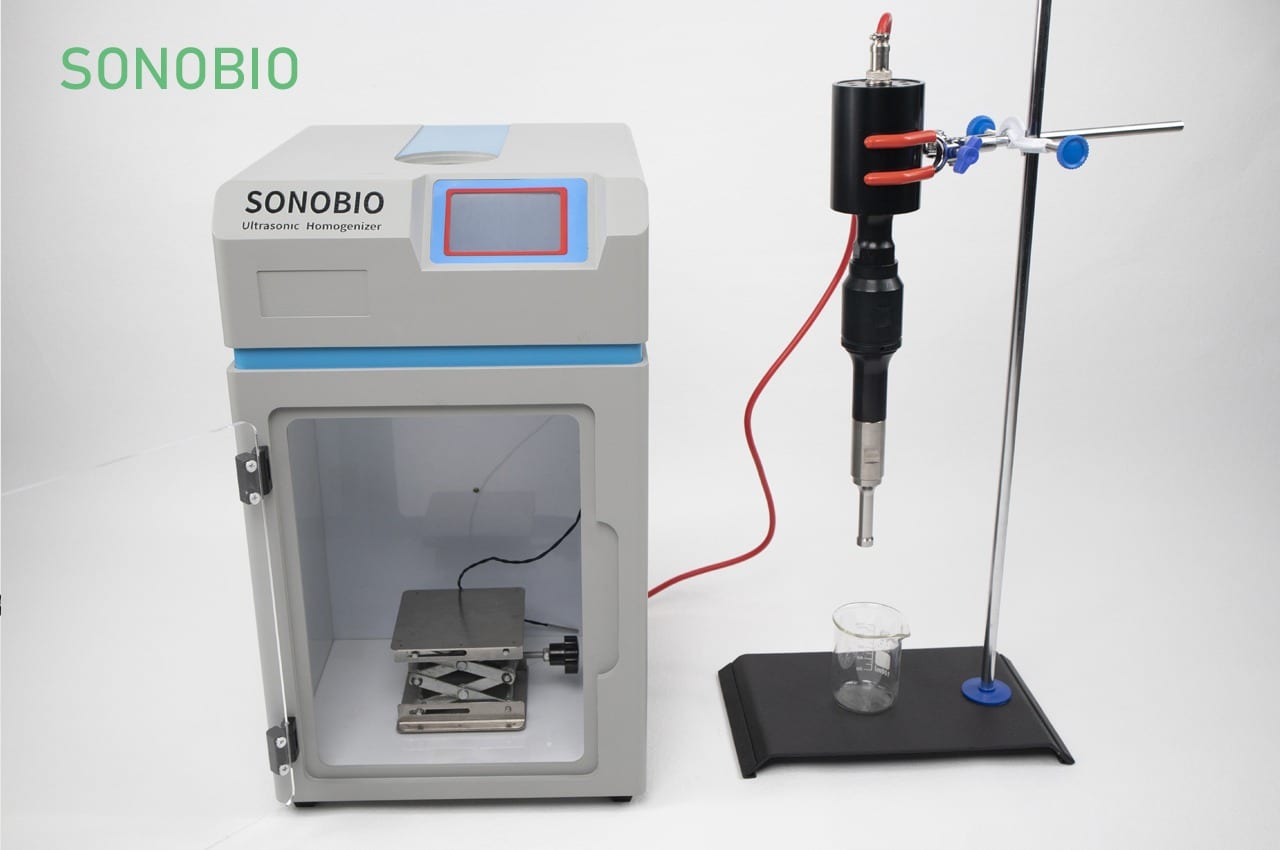
The research team selected a Sino Sonics integrated ultrasonic homogenizer for this work. For nanoparticle synthesis at small-to-medium scale, the integrated platform offers several advantages over older, fragmented setups:
- Built-in soundproof box — keeps lab noise levels acceptable for repeated 45-minute protocols (without it, repeated long-session sonication is fatiguing for both operator and adjacent lab members)
- Programmable pulse intervals — the 5-minute on / brief-off cycle can be set on the controller and run automatically, eliminating manual timer errors over the 45-minute synthesis
- Frequency stability under load — automatic frequency tracking ensures the probe stays at resonance even as the suspension viscosity changes during nanoparticle formation
- Titanium alloy probe — chemically inert to chitosan, starch, and capecitabine, and resistant to cavitation erosion that would otherwise shed contaminating particles into the suspension
- Real-time temperature monitoring — critical for protecting heat-sensitive polysaccharides
For researchers replicating this protocol or adapting it to other prodrug nanoparticle systems, the integrated configuration removes most of the variables that make pilot-scale ultrasonication unreliable.
What This Means for Other Nanoparticle Research Groups
The Bhattacharya et al. study is part of a broader trend in pharmaceutical nanotechnology where ultrasonic homogenization is being used as a first-line tool for nanoparticle synthesis, replacing high-pressure homogenization and microfluidization in many lab-scale workflows. The reasons are practical:
- Lower equipment cost than microfluidizers ($1,000s vs $10,000s+)
- Faster protocol iteration — pulsed sonication parameters can be adjusted in seconds during method development
- Better preservation of bioactives — sub-cavitation tuning protects sensitive payloads
- Reproducibility across labs — equipment with frequency tracking and digital pulse control gives reproducible particle distributions across operators
Sino Sonics has now been cited in 13+ peer-reviewed publications spanning cancer drug delivery (this study and others), biomedical sensors, water treatment, plant chemistry, materials engineering, and tribology. The full list is available on our Research Citations page.
Replicating This Setup in Your Lab
For research groups planning capecitabine, paclitaxel, or other prodrug nanoparticle work using ultrasonication, the configuration that supported this study is available in the SONOBIO Integrated Ultrasonic Homogenizer line:
- 800 W ultrasonic generator with automatic frequency scanning (19–26 kHz)
- Soundproof box (15 lb / 6.8 kg, 18.5 × 12.6 × 20.6 in)
- Titanium alloy probe options: Φ3 mm (0.3–100 ml), Φ6 mm (0.3–200 ml), Φ8 mm (10–300 ml)
- Programmable pulse cycles, 99-hour automatic operation
- Real-time temperature sensor with overheat protection (32–572°F)
- 3.2-inch color LCD touch screen with 10-set data storage
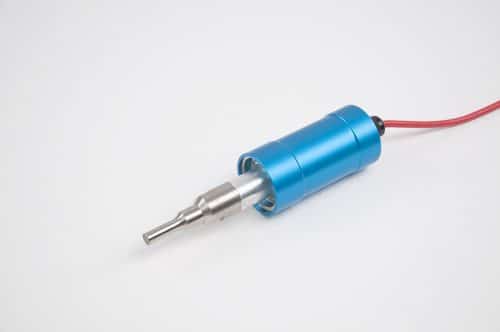
For groups working with smaller volumes or needing portability, the SONOBIO Handheld Ultrasonic Homogenizer offers a compact alternative at 28–32 kHz with the same automatic frequency scanning and titanium alloy probes.
Custom Configurations for Specialized Research
Many research groups need configurations beyond standard catalog options — non-standard frequencies for tissue-specific work, larger horns for scaled-up synthesis, or specialized probe geometries for unusual sample geometries. Sino Sonics offers OEM probe and generator customization at no design fee for academic and industrial research projects.
If you are planning nanoparticle research that requires custom ultrasonic configurations, contact us at [email protected] to discuss specifications.
Read the Original Paper
Bhattacharya, S., Page, A., & Shinde, P. (2024). Development and Evaluation of Potato Starch and Chitosan Modified Capecitabine Nanoparticles for Enhanced Colon Cancer Treatment: A Comprehensive Study on Physical Properties, In Vitro Efficacy, and In Vivo Targeting. Research Square. Read the preprint →
Looking for more research that uses Sino Sonics equipment? Our Research Citations page lists all 13+ peer-reviewed publications across cancer drug delivery, biomedical sensors, water treatment, plant chemistry, materials engineering, and tribology.
Related posts


Popular products
-
 20kHz 1200Watt Branson 900 Replacement
El precio original era: $300.00.$260.00El precio actual es: $260.00.
20kHz 1200Watt Branson 900 Replacement
El precio original era: $300.00.$260.00El precio actual es: $260.00.
-
35kHz 900Watt F30-SA-P
El precio original era: $250.00.$207.00El precio actual es: $207.00.
-
Impedance Analyzer PV520A-S (1KHz~1MHz)
El precio original era: $2,600.00.$2,350.00El precio actual es: $2,350.00.
-
 15kHz Booster; Gain 1:2.5
El precio original era: $180.00.$165.00El precio actual es: $165.00.
15kHz Booster; Gain 1:2.5
El precio original era: $180.00.$165.00El precio actual es: $165.00.
-
28kHz 600Watt F30-SA-1
El precio original era: $208.00.$184.00El precio actual es: $184.00.
-
SONOBIO Split-type Ultrasonic Homogenizer/Sonicator
Rango de precios: desde $1,399.00 hasta $1,899.00
-
35kHz 900Watt Spot Welding Set
El precio original era: $240.00.$200.00El precio actual es: $200.00.
-
20kHz 2000Watt F50-SA
El precio original era: $220.00.$180.00El precio actual es: $180.00.
-
35kHz 300Watt-D30-SA
El precio original era: $220.00.$170.00El precio actual es: $170.00.
-
35kHz 800Watt F25-SA-1
El precio original era: $240.00.$207.00El precio actual es: $207.00.
-
15kHz 2600Watt F60-SA-1
El precio original era: $280.00.$220.00El precio actual es: $220.00.
-
Impedance Analyzer PV520A-V (1KHz~5MHz)
El precio original era: $4,250.00.$3,650.00El precio actual es: $3,650.00.
-
Ultrasonic homogenizer Probe, Lab Sonicator homogenizer Accessories, Probe Φ3 Φ6 Φ8 mm, Titanium Alloy
Rango de precios: desde $139.00 hasta $159.00
-
40khz 400Watt D30-SA-P
El precio original era: $220.00.$184.00El precio actual es: $184.00.
-
20kHz 2000Watt Ultrasonic Generator
El precio original era: $1,000.00.$900.00El precio actual es: $900.00.