By Sino Sonics — published 2026-05-04
If you’re evaluating an ultrasonic cutter knife for a rubber, food, plastic, or composite line, the wrong choice doesn’t just waste budget. It produces blade fatigue in weeks, melted edges, or product rejects you can’t trace. After more than a decade of building ultrasonic cutting systems for factories across 30+ countries, we’ve seen the same five buying mistakes repeated. This guide walks you through what an ultrasonic cutter knife actually is, what it can (and can’t) cut, and a practical 5-step framework to size the right blade, frequency, and power for your specific process.
What Is an Ultrasonic Cutter Knife?
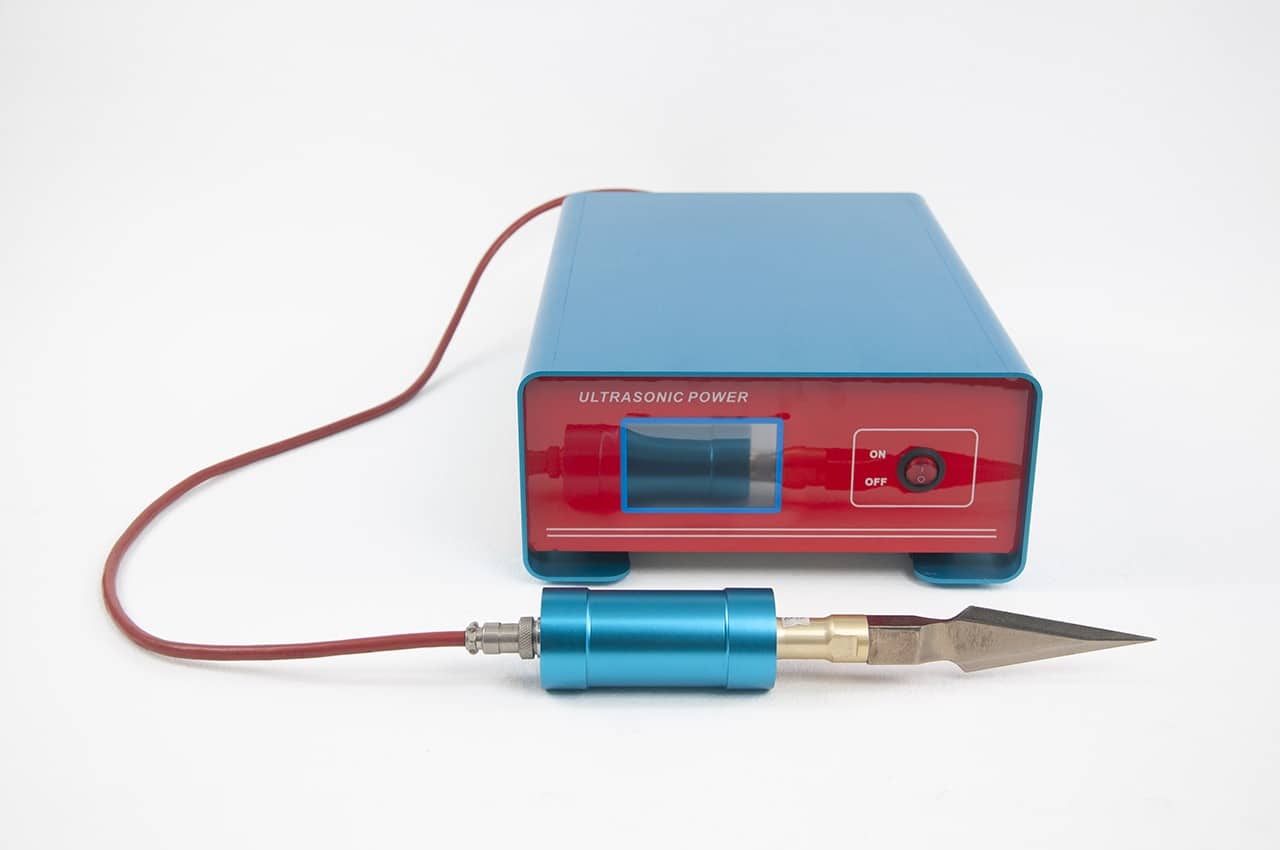
An ultrasonic cutter knife is an industrial cutting tool that uses high-frequency mechanical vibration (typically 20kHz or 40kHz, with a tip amplitude between 20 and 100 micrometers) to slice through materials at extremely low cutting force. The blade itself does not pressure-cut the workpiece. Instead, the rapid micro-vibration locally fractures or softens the bonds at the cut interface, and the blade glides through with almost no resistance.
That distinction matters in production. Conventional blades cut by squeezing material until it splits, which creates compression, heat, and edge deformation. An ultrasonic cutter knife removes those failure modes, which is why it has become the standard choice for sticky, elastic, heat-sensitive, or fibrous materials such as rubber, food, thermoplastics, composites, and technical textiles.
How an Ultrasonic Cutter Knife Works
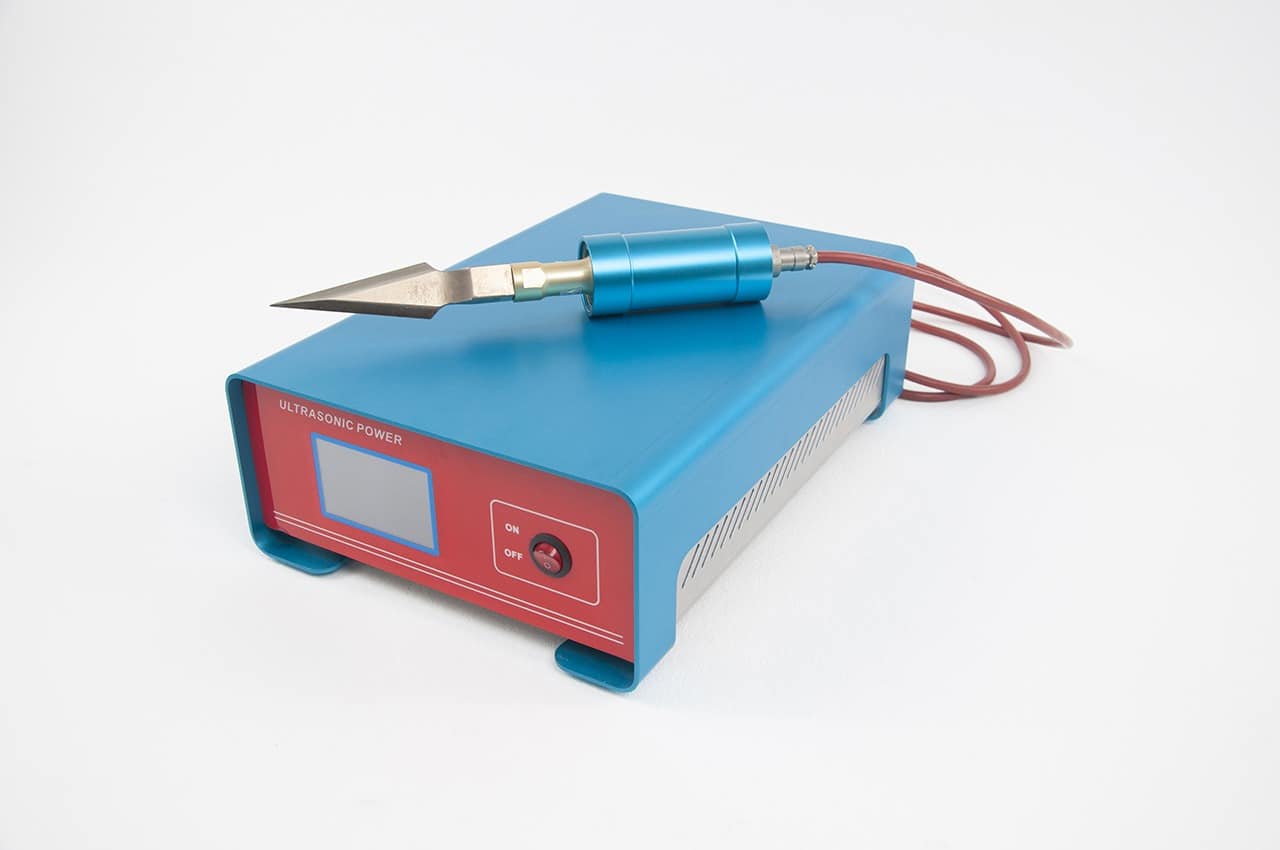
The three components
- Ultrasonic generator (50 to 2000 W): converts mains AC into a high-frequency electrical signal, typically 20kHz or 40kHz, with auto-frequency tracking to compensate for thermal drift.
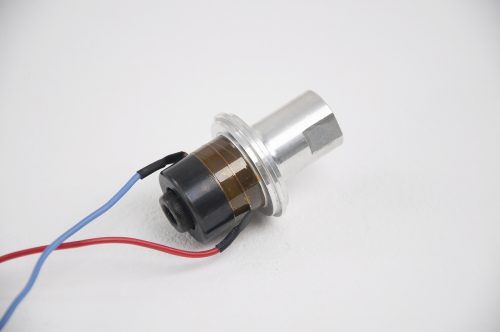
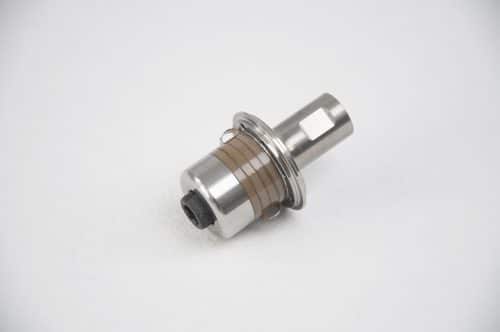
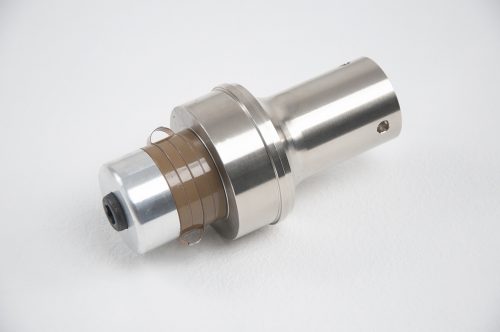
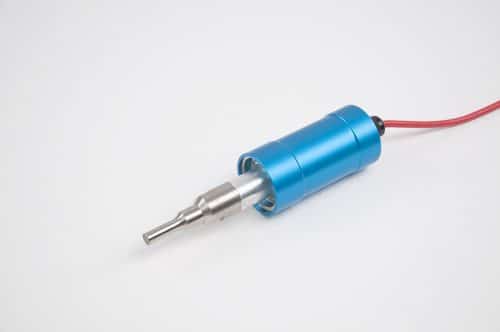
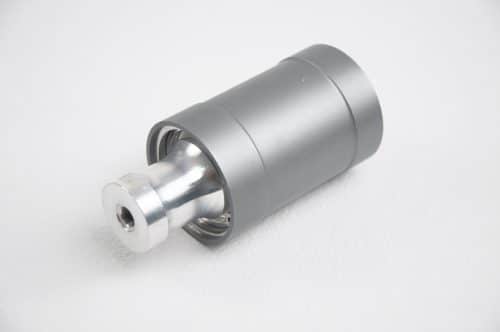
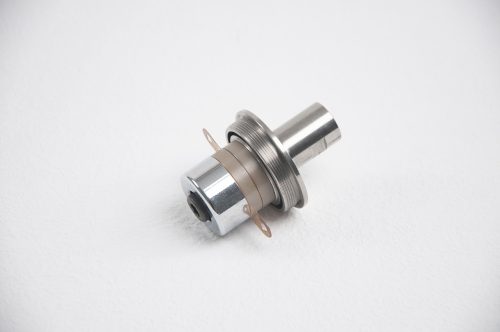
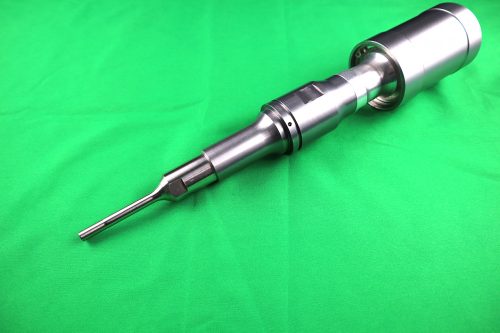
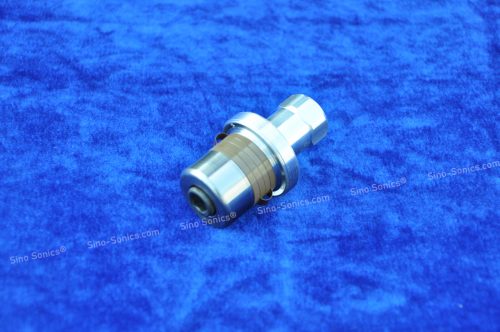
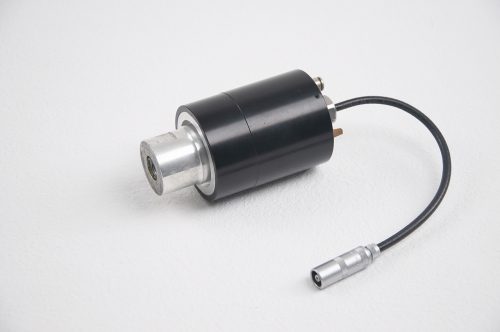
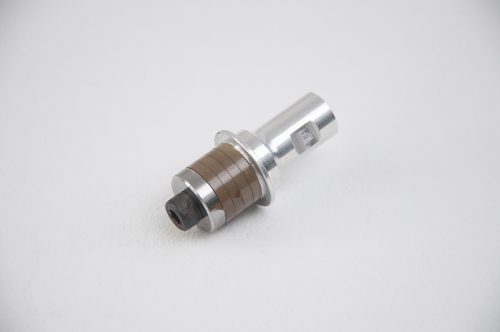
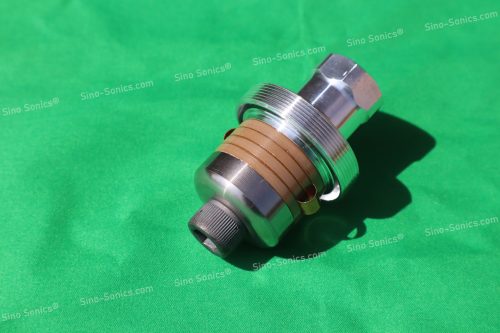
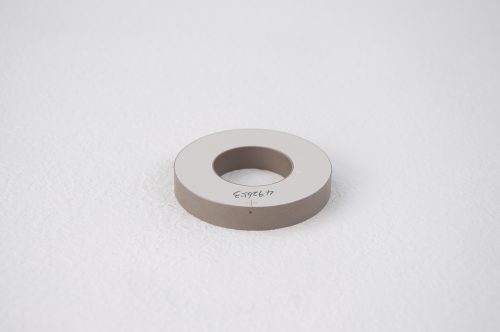
- Transducer (converter): a piezoelectric ceramic stack that converts the electrical signal into mechanical vibration along the longitudinal axis.
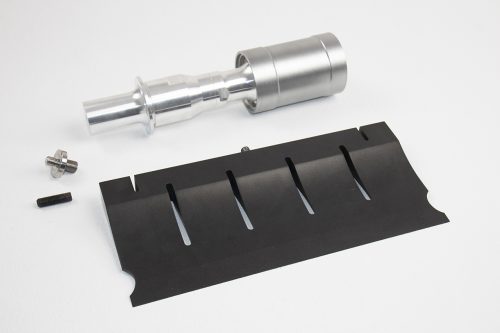
- Horn and blade (sonotrode): amplifies the vibration and transmits it to the cutting edge. The blade itself is most often titanium alloy (Ti-6Al-4V) for production use, or 440C stainless steel for low-frequency use.
Frequency choice: 20kHz vs 40kHz
Frequency is the single most misunderstood parameter for first-time buyers. A higher frequency does not mean a better cutter. It means a different cutter.
| Frequency | Tip amplitude | Best for | Trade-off |
|---|---|---|---|
| 20 kHz | 50 to 100 um | Thick or dense materials such as rubber sheets, frozen food blocks, composite panels | Higher amplitude removes more material per stroke but generates more heat |
| 40 kHz | 20 to 40 um | Thin or delicate materials such as pastry, films, gel sheets, thin baked goods | Lower amplitude gives a cleaner edge but slower throughput |
A 20kHz unit trying to cut a 1 mm cake layer will shake the cake apart. A 40kHz unit trying to cut a 5 mm rubber sheet will stall. Match the frequency to the material before anything else.
What an Ultrasonic Cutter Knife Can (and Can’t) Cut
Best-fit materials
- Rubber and elastomers: natural rubber, silicone, EPDM, NBR. The cut face is smooth with no burrs because no traditional drag is applied to the elastic material. See our Ultrasonic Rubber Cutter for production setups.
- Sticky or soft food: cake, cheese, frozen fish, chocolate bars, sandwich blocks. The vibrating blade self-cleans on every cycle, so product does not adhere, and portion weight remains consistent across thousands of cuts. See the Ultrasonic Food Cutter line for inline integration.
- Thermoplastics: HDPE, PP, PVC, ABS. The blade does not melt the plastic the way a hot knife does, which means no smoke, no welded edges, no contamination of the cut face. Recommended pairing: Ultrasonic Plastic Cutter.
- Composites and honeycomb: aerospace honeycomb panels, carbon fiber prepreg, kevlar/aramid sheets. Ultrasonic vibration drastically reduces fiber pull-out and surface delamination, which is why aerospace and automotive composite shops use ultrasonic blades for trim and net-shape cuts.
- Technical textiles: carpets, woven bags, automotive headliner fabric. The same stroke cuts and seals the edge in one pass, preventing fraying.
Materials it does not cut well
- Metals of any thickness: the amplitude cannot overcome plastic deformation resistance. Use a different cutting technology.
- Hard ceramics or glass: brittle materials chip and fracture under the cyclic cavitation stress.
- Very dry, brittle materials such as cured epoxy boards: irregular crack propagation produces ragged edges.
How to Choose the Right Ultrasonic Cutter Knife: A 5-Step Framework
Step 1: Identify your material category
Use the lists above to classify your primary material. If you cut multiple materials on the same line, specify the cutter for the hardest case, not the average. A unit that handles 5 mm rubber will easily handle 1 mm fabric; the reverse is not true.
Step 2: Define your throughput
| Throughput | Recommended setup | Power |
|---|---|---|
| Lab or R and D (under 50 cuts/hr) | Handheld ultrasonic cutter | 100 to 300 W |
| Small-batch production (50 to 500 cuts/hr) | Bench-top cutter with foot pedal | 300 to 800 W |
| Continuous production line | Robot or CNC-mounted cutter (rotary horn) | 800 to 2000 W |
For automated lines, a 42 mm cylindrical horn like the Rotary Ultrasonic Cutter mounts cleanly on robotic arms, plotters, and gantry CNC systems.
Step 3: Pick blade material
- Titanium alloy (Ti-6Al-4V): fatigue life is typically 5 to 10 times longer than stainless under the same load. The right choice for any 24/7 production line; pays back the price premium within months.
- Stainless steel (440C): higher initial hardness, lower cost, suitable for low-duty-cycle or corrosion-prone environments where blades are replaced often anyway.
Step 4: Pick blade geometry
- Straight blade: general-purpose cutting, by far the most common.
- Slitting blade: long-pass slitting of textile rolls or film webs.
- Disc blade: high-speed rotary cuts for inline food production or carpet trimming.
- Custom EDM-machined blade: irregular profiles for 3D composite parts; common in aerospace.
Step 5: Match the generator
Three rules: break any of them and the system will run unstable.
- The generator, transducer, and horn must all be tuned to the same nominal frequency (a 20kHz generator must drive a 20kHz transducer and a 20kHz horn).
- The generator power rating must be at least 1.3 times the steady-state cutting load, leaving headroom so the unit never hits 100% duty cycle.
- Confirm communication protocol (PLC, Modbus, analog) up front if the unit will eventually be integrated into an automated cell. Retrofitting comms later is expensive.
Common Mistakes Buyers Make
- Optimizing for sticker price, not blade life. A cheap stainless blade may last one to two weeks under continuous load. A titanium blade in the same slot lasts six to twelve months. Compute the total cost of ownership (blade replacements, downtime, labor) before deciding.
- Frequency-material mismatch. Trying to slice 5 mm vulcanized rubber with a 40kHz unit will stall the generator. Trying to portion 1 mm sponge cake with a 20kHz unit shakes the cake apart. Match frequency to material first.
- Ignoring cooling. Continuous cutting beyond 30 minutes requires forced air or water cooling on the transducer. Without it, the piezo stack heats up, the resonant frequency drifts, and the generator throws an overload fault.
- Skipping the sample test. Rubber compounds vary in vulcanization. Food materials vary in moisture content. Composite layups vary in fiber direction. Demand a free sample-cutting test from the supplier before committing. Sino Sonics does this on a 100 g sample with a written cut report returned within seven days.
- No plan for automation interface. If there is even a 30% chance the line will be automated within one years, choose a generator with PLC/Modbus support from day one. Replacing a non-comms generator later means rewiring the whole cell.
Maintenance and Troubleshooting
| Symptom | Likely cause | Fix |
|---|---|---|
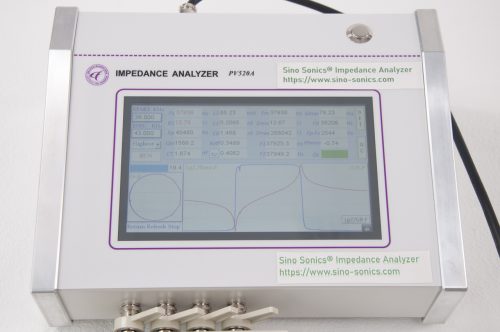
| Cutting force drops over time | Blade worn / amplitude drift | Replace blade; verify resonant frequency with an impedance analyzer |
| Blade overheats abnormally | Cooling failed / amplitude set too high | Check cooling fan; reduce amplitude 10 to 15% |
| Cut face shows burrs | Blade dulled or operator pressing too hard | Resharpen or replace blade; reduce feed force |
| Generator reports frequency drift | Loose horn screw / blade deformation | Re-torque to spec; replace horn if it has a permanent set |
| Audible squeal during cut | Horn detuned / debris in cut zone | Clean cut zone; re-measure resonance with an impedance analyzer |
A periodic impedance check (every 200 hours of cut time, or whenever cut quality drops) is the single most useful preventive maintenance practice.
When to Move From Handheld to Automated
You have outgrown a handheld unit when any of these become true:
- Daily cut volume exceeds 200 parts.
- Repeatability requirement is tighter than 0.5 mm.
- The line runs more than 16 hours per day, requiring forced cooling.
- Cut path is non-trivial (curved, 3D, or multi-axis).
At that point, move to a CNC or robot-mounted system. The retrofit pays back in labor savings and reject reduction within six to twelve months in most production environments.
Conclusion: The Right Ultrasonic Cutter Knife Is a Process Decision, Not a Product Decision
Choosing the correct ultrasonic cutter knife comes down to a single discipline: match the material to the frequency, match the frequency to the blade material and geometry, and match the whole assembly to a generator that has 30% power headroom. Get those four right, and the cutter will run for years.
Three suggested next steps depending on where you are in the buying cycle:
- R and D phase: request a free sample cutting test. Send us 100 g of your material; we return a written cut report (parameters, edge photos, achievable tolerance) within seven days.
- Small-batch production: request an OEM configuration with generator + transducer + custom blade specified for your line.
- Full integration: request our engineering pack with PLC/Modbus protocol document, mounting drawings, and a virtual commissioning checklist.
Browse our complete ultrasonic cutting solutions, or contact us via the email and WhatsApp shown on the contact page.
Sino Sonics designs and manufactures ultrasonic cutting and homogenization equipment for industrial and laboratory use, exporting to more than 30 countries. All products are built in our Wuxi, China facility.
Related posts


Popular products
-
 35kHz 300Watt-D30-SA
Original price was: $220.00.$170.00Current price is: $170.00.
35kHz 300Watt-D30-SA
Original price was: $220.00.$170.00Current price is: $170.00.
-
Impedance Analyzer PV520A-T (1KHz~3MHz)
Original price was: $3,200.00.$2,750.00Current price is: $2,750.00.
-
35kHz 1000Watt F30-ST-1
Original price was: $280.00.$220.00Current price is: $220.00.
-
20kHz 1200Watt Branson 900 Replacement
Original price was: $300.00.$260.00Current price is: $260.00.
-
35kHz 900Watt Spot Welding Set
Original price was: $240.00.$200.00Current price is: $200.00.
-
20kHz 2000Watt Transducer (Aluminum Housing)
Original price was: $360.00.$330.00Current price is: $330.00.
-
 Ultrasonic Food(Cake,biscuit)Cutter/Cutting Machine/Blade
Price range: $1,500.00 through $1,700.00
Ultrasonic Food(Cake,biscuit)Cutter/Cutting Machine/Blade
Price range: $1,500.00 through $1,700.00
-
SoniKKs 35kHz 1200watt Replacement
Original price was: $280.00.$250.00Current price is: $250.00.
-
20kHz 2000Watt Spot Welding Set
Original price was: $300.00.$260.00Current price is: $260.00.
-
35kHz 900Watt 35FA915-1
Original price was: $250.00.$207.00Current price is: $207.00.
-
Telsonic 36kHz 1000watt Replacement
Original price was: $580.00.$550.00Current price is: $550.00.
-
35kHz 800Watt F25-SA-1
Original price was: $240.00.$207.00Current price is: $207.00.
-
SONOBIO Non-Contact 4 Channel Ultrasonic Homogenizer/ Sonicator
Original price was: $4,000.00.$2,599.00Current price is: $2,599.00.
-
40kHz 900Watt F30SA1
Original price was: $250.00.$220.00Current price is: $220.00.
-
Piezo Ceramic Ring Φ60mm
Original price was: $17.00.$15.50Current price is: $15.50.