Ultrasonic cutting is the use of a blade vibrating at ultrasonic frequencies (typically 20-40 kHz) to slice through a material with very low forward force. Because the blade is the active cutter — not pressure from the operator — ultrasonic cutting produces clean edges on materials that would crumble, smear, or tear under a conventional blade. This guide walks through how it works, what it cuts, how to choose a frequency and blade, and how ultrasonic cutting compares to laser, hot wire, and mechanical cutting.
How Ultrasonic Cutting Works
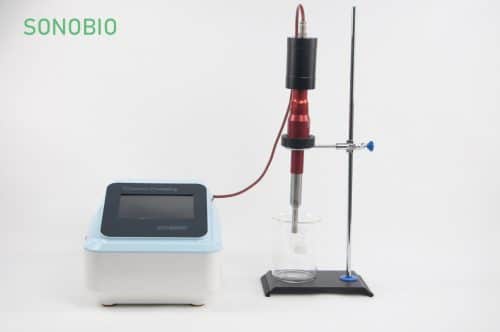
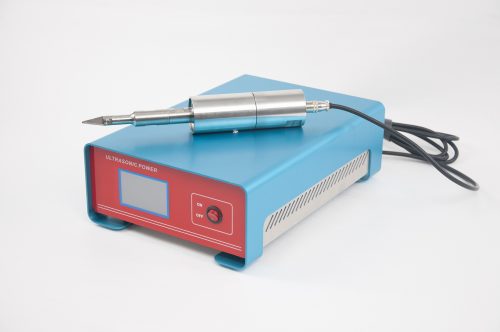
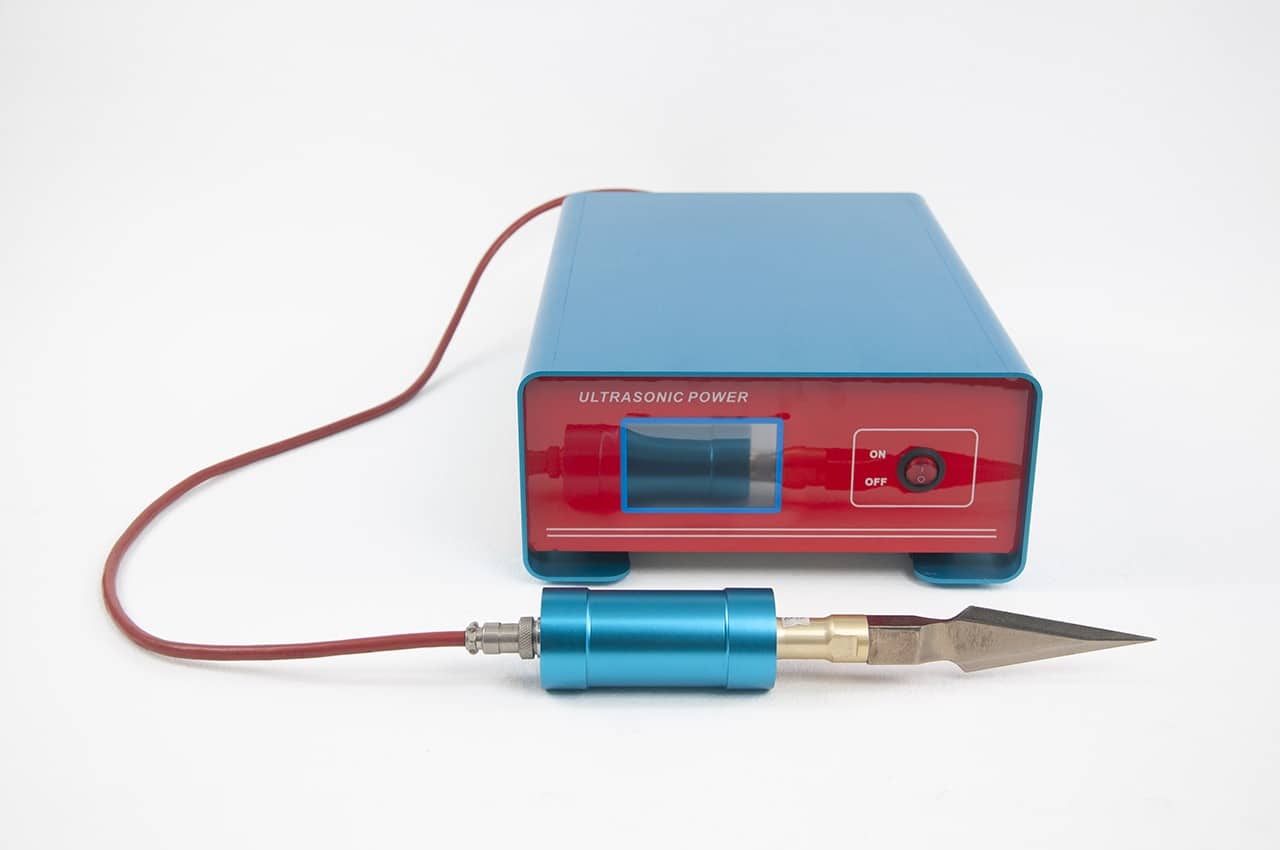
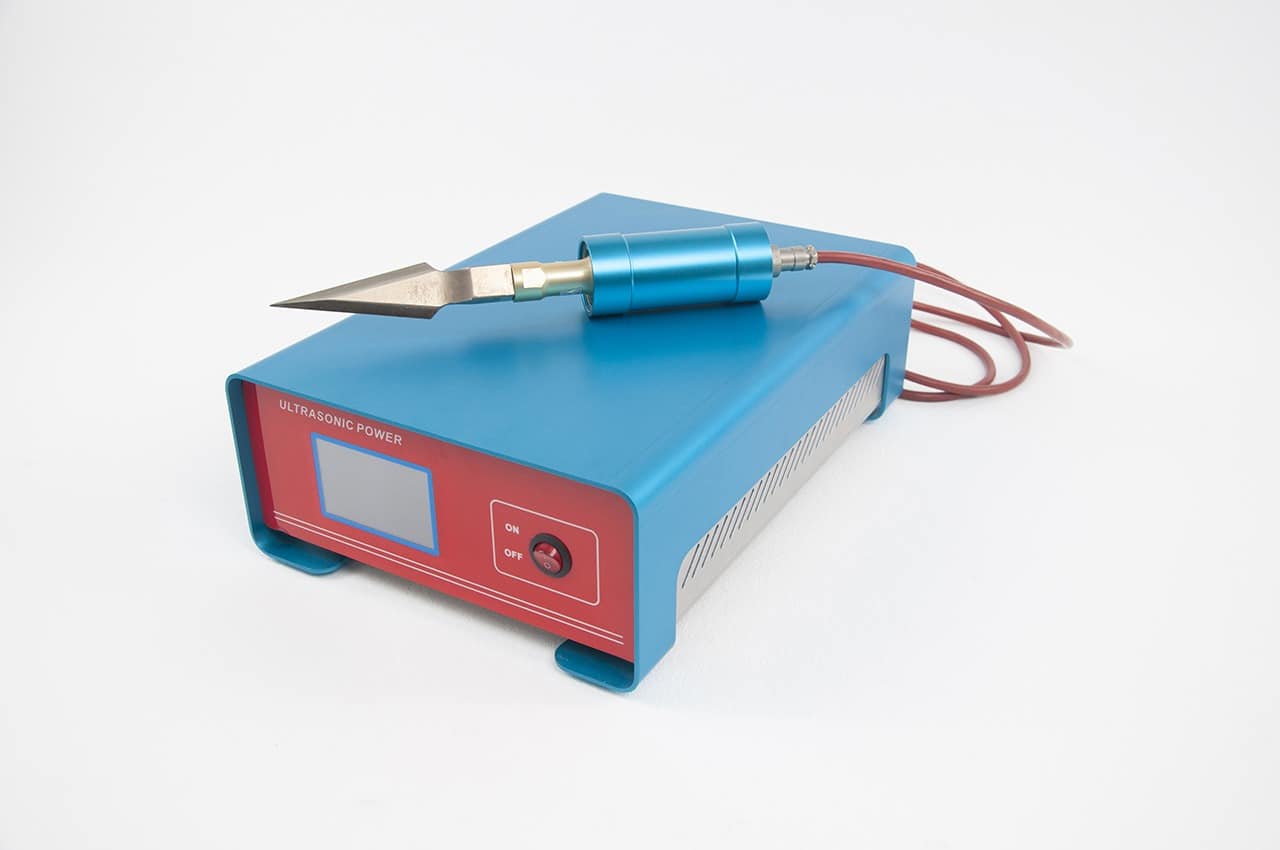
A complete ultrasonic cutting system has three matched parts:
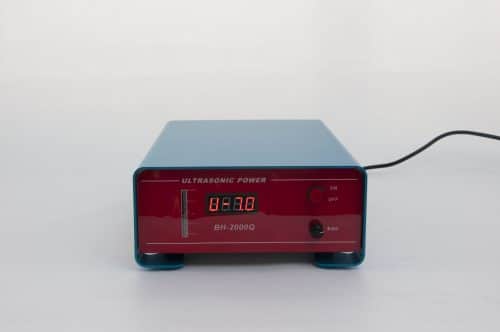
- Ultrasonic generator — converts mains electricity into a high-frequency electrical signal at the system’s resonant frequency.
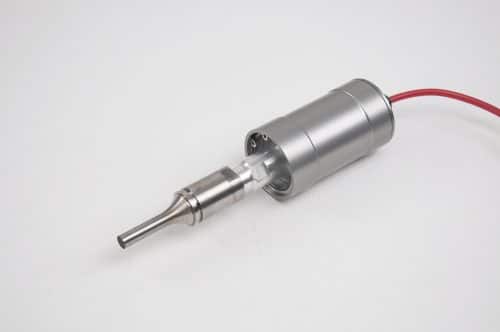
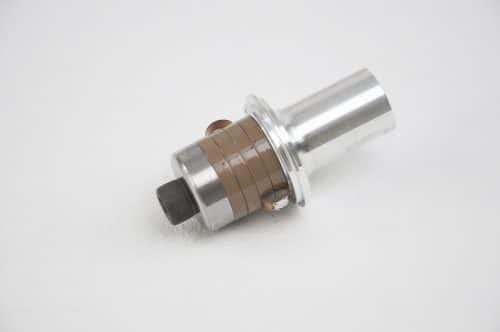
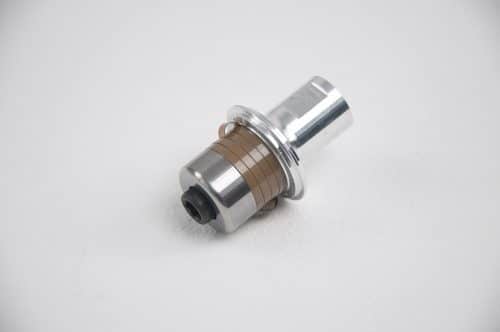
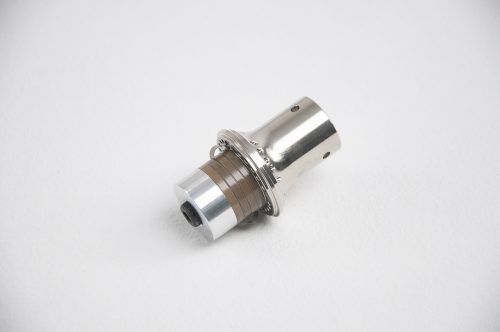
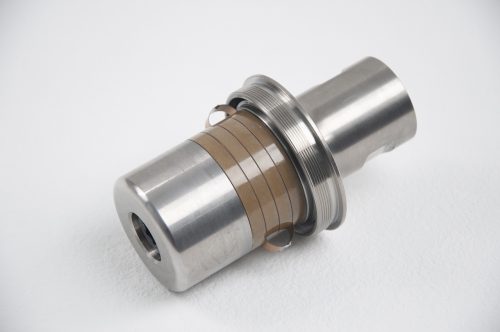
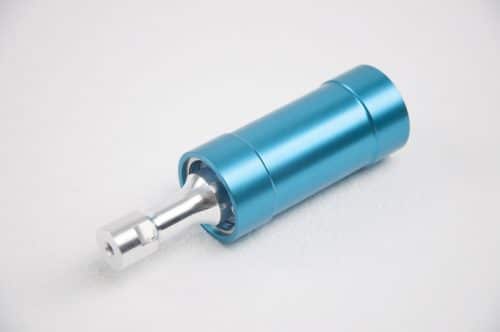
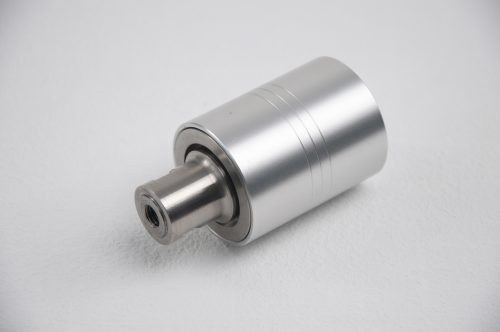
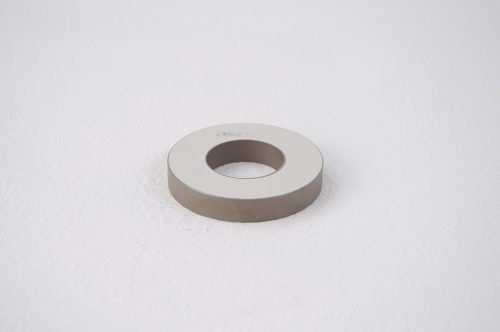
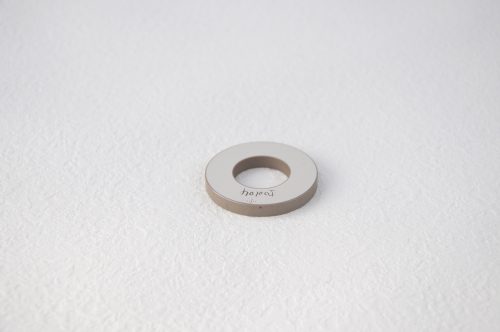
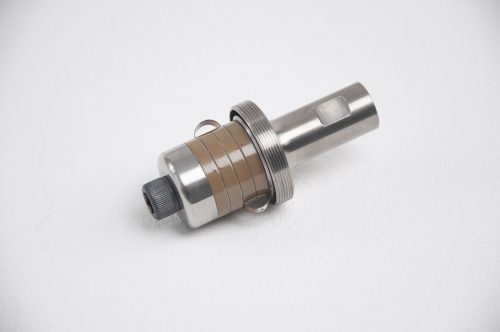
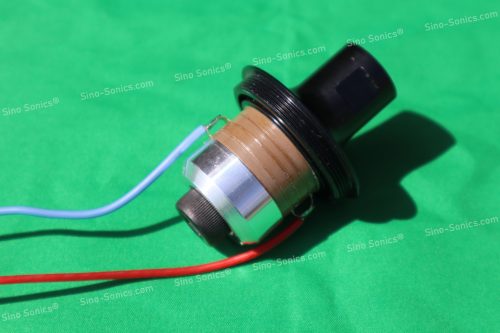
- Transducer (converter) — turns the electrical signal into mechanical vibration using piezoelectric ceramics (most commonly PZT-4 or PZT-8 in a Langevin stack).
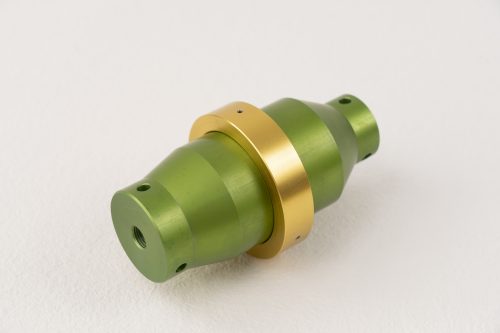
- Blade / horn — amplifies the mechanical vibration and delivers it to the cutting edge. The blade vibrates with an amplitude of typically tens of micrometers, oscillating at the generator’s frequency.
When the vibrating blade contacts the material, three things happen at the cut interface: friction between blade and material drops to near zero (the contact is instantaneous each cycle), localized heating is minimized, and any sticky or elastic material at the cut zone is fluidized rather than dragged. The result: clean cuts with negligible deformation, no edge crumbling, and dramatically reduced cutting force compared to conventional blades.
Materials Suitable for Ultrasonic Cutting
Ultrasonic cutting excels on materials where conventional methods fail or compromise quality:
- Soft and elastic foods: cakes, frozen products, cheese, gummy/gel products, layered pastries, frozen pizza, ice cream bars. Clean portioning with no smearing.
- Rubber and elastomers: nitrile, EPDM, silicone sheet — no tearing, no blade fouling.
- Composites and prepregs: carbon fiber, fiberglass, aramid sheet — no delamination, no fiber pullout.
- Fabrics and non-wovens: technical textiles, filter media, geotextiles — seamlessly cut with simultaneous edge sealing on thermoplastic fabrics.
- Thin films and foams: packaging films, foam insulation, acoustic foam.
- Soft plastics and gaskets: PE, PP gaskets, soft PVC.
Not suitable for: hard metals, dense ceramics, hardwoods — these need laser, waterjet, or mechanical methods. Ultrasonic cutting also struggles with very thick (>20 mm) materials where the energy can’t penetrate the bulk.
Frequency Selection: 20, 25, 30, 35, or 40 kHz?
Frequency is the most fundamental design choice and controls amplitude, blade size, and cut characteristics:
- 20 kHz — highest amplitude, longest blade reach. Best for thick rubber, large composite trim, heavy-duty industrial cutting. Loudest in operation (audible harmonics).
- 25 kHz — balanced amplitude and precision. Default for most general-purpose food and elastomer cutting.
- 30 kHz — quieter, slightly finer cuts. Common for benchtop and lab use.
- 35-40 kHz — smallest amplitude, finest cut detail, near-inaudible. Best for delicate work: thin films, fine fabric, microscale prototypes.
As a rule: higher frequency means smaller amplitude and finer detail, but lower penetration. Going below 20 kHz is unusual (audible noise) and going above 40 kHz starts to lose practical cutting power for typical industrial materials.
Blade Geometries
Three main blade families cover most ultrasonic cutting applications:
- Straight blade (knife) — the most common. Used for portion cutting (cakes, pastries), gasket cutting, prototype trim. Comes in handheld and machine-mounted forms.
- Rotary disc blade — for continuous web cutting: rubber sheet, fabric rolls, non-woven media. Rotates as the material feeds through.
- Specialty / OEM — application-specific geometries: scalloped blades for textured products, serrated blades for fibrous foods, narrow-tip blades for slot cutting. Most OEM cutters use a custom blade tuned to the matched generator-transducer set.
Ultrasonic Cutting vs Alternatives
| Method | Best for | Edge quality | Throughput | Heat damage |
|---|---|---|---|---|
| Ultrasonic cutting | Soft, elastic, layered materials | Excellent — clean, no deform | Medium-high | Negligible |
| Laser | Thin metals, hard plastics, paper | Excellent on hard, charred on soft | High | Significant (charred edges, color change) |
| Hot wire / heated blade | Foam, low-density plastics | Good but slight bead | Medium | Moderate (melted bead) |
| Waterjet | Thick metals, stone, composites | Excellent | Medium | None (ambient temp) |
| Conventional rotary / band saw | Wood, metal, dense plastics | Variable, depends on tool wear | High | Friction heat |
Selection Checklist
Before specifying an ultrasonic cutting system, gather:
- Material: exact composition, thickness range, temperature at cut point (room, frozen, or heated process).
- Throughput: cuts per minute, total line speed, duty cycle (intermittent or continuous).
- Edge quality target: tolerance, surface finish requirements, downstream packaging constraints.
- Integration: handheld, benchtop fixture, robot end-effector, or inline production module.
- Hygiene / cleanability: food/pharma require IP-rated and washdown-capable designs.
- Operator environment: noise tolerance (drives frequency choice), space, electrical supply.
FAQ
How long does an ultrasonic cutting blade last?
Far longer than a conventional blade in the same application. Because ultrasonic cutting reduces friction and contact force, blade wear is minimal. In rubber/gasket cutting we’ve seen single-digit days of life replaced by months. Actual life depends on material abrasiveness and operating duty cycle.
Is ultrasonic cutting safe for food contact?
Yes — when configured with food-grade titanium or stainless steel blades and sanitary-grade housings. Many bakery, frozen-food, and confectionery lines run ultrasonic cutters as their primary portioning method. Cleaning is typically straightforward: rinse + short cleaning sonication.
Does ultrasonic cutting work on metals?
Not on hard metals (steel, aluminum bulk) — for those, laser or waterjet. Ultrasonic cutting can work on very thin metal foils or soft metal composites, but it’s outside the typical use case.
How much power do I need?
Power scales with throughput and material thickness, not directly with cut quality. Lab/handheld cutting commonly runs at 100-500 W; production-line cutters typically 800 W to 2-3 kW. The right answer depends on duty cycle: a 600 W intermittent unit can match a 1000 W continuous-duty unit in average cuts per hour. Contact us with your throughput target and we’ll spec the power and frequency together.
Can I retrofit ultrasonic cutting onto my existing line?
Usually yes. Most production lines integrate ultrasonic cutters by replacing the existing cutting station with a matched generator-transducer-blade module on the same servo positioner. Mechanical interfacing is straightforward; the bigger change is operator training (no downward force needed) and a small adjustment to feed rate.
Browse Sino Sonics Ultrasonic Cutting Range
Explore our full ultrasonic cutting machine range, or jump directly to:
- Handheld Ultrasonic Cutter 25kHz — lab and prototype cutting
- Rotary Ultrasonic Cutter — continuous web/sheet cutting
- Ultrasonic Food Cutter / Blade — bakery, frozen, confectionery
Or contact us with your material, throughput, and edge-quality requirements — we’ll spec the matched generator, transducer, frequency, and blade geometry, and run a validation cut on a sample of your material before shipping.
Related posts


Popular products
-
 28kHz 600Watt Spot Welding Set
El precio original era: $240.00.$200.00El precio actual es: $200.00.
28kHz 600Watt Spot Welding Set
El precio original era: $240.00.$200.00El precio actual es: $200.00.
-
30kHz 1200Watt F30-SA-1
El precio original era: $250.00.$220.00El precio actual es: $220.00.
-
35kHz 900Watt F30-SA-P
El precio original era: $250.00.$207.00El precio actual es: $207.00.
-
40kHz 800Watt F25SAP
El precio original era: $200.00.$180.00El precio actual es: $180.00.
-
TelSonic Replacement 20kHz 3200Watt
El precio original era: $390.00.$350.00El precio actual es: $350.00.
-
20kHz 800Watt Transducer (Aluminum Housing)
El precio original era: $300.00.$280.00El precio actual es: $280.00.
-
35kHz 1200Watt Ultrasonic Generator
El precio original era: $1,100.00.$950.00El precio actual es: $950.00.
-
35kHz 1200watt Vibrating-Screen Transducer
El precio original era: $350.00.$300.00El precio actual es: $300.00.
-
Piezo Ceramic Ring Φ69~Φ70mm
$20.00
-
 20kHz Branson Booster; Gain 1:1
El precio original era: $600.00.$350.00El precio actual es: $350.00.
20kHz Branson Booster; Gain 1:1
El precio original era: $600.00.$350.00El precio actual es: $350.00.
-
Piezo Ceramic Ring Φ40mm
El precio original era: $6.00.$5.00El precio actual es: $5.00.
-
SONOBIO homogeneizador ultrasónico
Rango de precios: desde $1,399.00 hasta $1,899.00
-
Rotary Handheld Ultrasonic Cutter Laboratory Industrial Ultrasound Plastic Cutting Knife Machine
El precio original era: $2,499.00.$2,000.00El precio actual es: $2,000.00.
-
28kHz 600Watt F30-ST-1
El precio original era: $240.00.$207.00El precio actual es: $207.00.
-
40kHz 600Watt F30-SA-1
El precio original era: $220.00.$184.00El precio actual es: $184.00.